A recent conversation with a friend highlighted to me how little most westerners know about Islam, and how they struggle to distinguish between Islam and Islamism. This lack of knowledge, cultivated in the West to keep us fearful and supportive of Israel, creates the very conditions that originally provoked ideological extremism in the Middle East and ultimately led to the rise of a group like Islamic State.
Here I examine four common misconceptions about Muslims, Islam and Islamism – and about the West. Each is a small essay by itself.
Islam is an intrinsically violent religion, one that naturally leads its adherents to become Islamists.
There is nothing unique or strange about Islam. Islam is a religion, whose adherents are called Muslims. Islamists, on the other hand, wish to pursue a political project, and use their Islamic identity as a way to legitmise efforts to advance that project. Muslims and Islamists are different things.
If that distinction is not clear, think of a parallel case. Judaism is a religion, whose adherents are called Jews. Zionists, on the other hand, wish to pursue a political project, and use their Jewish identity as a way to legitimise efforts to advance that project. Jews and Zionists are different things.
Notably, with the help of western colonial powers over the past century, one prominent group of Zionists had great success in realising their political project. In 1948 they established a self-declared “Jewish” state of Israel by violently expelling Palestinians from their homeland. Today, most Zionists identify at some level with the state of Israel. That is because doing so is advantageous, given that Israel is tightly integrated into “the West” and there are material and emotional benefits to be gained from identifying with it.
The record of the Islamists has been far more mixed and variable. The Republic of Iran was founded by clerical Islamists in a 1979 revolution against the despotic rule of a western-back monarchy led by the Shah. Afghanisan is ruled by the Islamists of the Taliban, young radicals who emerged after prolonged super-power meddling by the Soviets and Americans left their country ravaged and in the grip of feudal warlords. Nato-member Turkey is led by an Islamist government.
Each has a different, and conflicting, Islamist programme. This fact alone should highlight that there is no single, monolithic “Islamist” ideology. (More on that later.)
Some groups of Islamists seek violent change, others want peaceful change, depending on how they view their political project. Not all Islamists are the head-chopping zealots of Islamic State.
The same can be said of Zionists. Some seek violent change, others want peaceful change, depending on how they view their political project. Not all Zionists are the genocidal, child-killing soldiers sent by the state of Israel into Gaza.
The same kind of distinction can be made between the religion of Hinduism and the political ideology of Hindutva. The current government of India – led by Narendra Modi and his Bharatiya Janata Party – is fiercely ultra-nationalist and anti-Muslim. But there is nothing intrinsic to Hinduism that leads to Modi’s political project. Rather, Hindutvaism fits Modi’s political objectives.
And we can see similar political tendencies over much of Christianity’s history, from the Crusades 1,000 years ago through the forced Christian conversions of the West’s colonial era to a modern Christian nationalism that prevails in Trump’s MAGA movement in the United States, and dominates major political movements in Brazil, Hungary, Poland, Italy and elsewhere.
The main point is this: followers of political movements can – and often do – draw on the language of the religions they grew up with to rationalise their political programmes and invest them with a supposed divine legitimacy. Those programmes can be more or less violent, often depending on the circumstances such movements face.
The West’s obsession with associating Islam, and not Juadism, with violence – even as a self-declared “Jewish state” commits genocide – tells us precisely nothing about those two religions. But it does tell us something about the political interests of the West. More on that below.
But Islam, unlike Christianity, never went through an Enlightenment. That tells us there is something fundamentally wrong with Islam.
No, this argument entirely misunderstands the socio-economic basis of Europe’s Enlightenment and ignores parallel factors that snuffed out an earlier Islamic Enlightenment.
Europe’s Enlightenment emerged out of a specific confluence of socio-economic conditions prevailing at the tail-end of the 17th century, conditions that gradually allowed ideas of rationality, science, and social and political progress to be prioritised over faith and tradition.
The European Enlightenment was the result of a period of sustained wealth accumulation made possible by earlier technical developments, particularly relating to the printing press.
The change from hand-written texts to mass-produced books increased the dissemination of information and slowly eroded the status of the Church, which until then had been able to centralise knowledge in the hands of the clergy.
This new period of intense scientific inquiry – encouraged by greater access to the wisdom of previous generations of thinkers and scholars – also unleashed a political tide that could not be reversed. With the erosion of the Church’s authority came the diminishment of the authority of monarchs, who had been ruling under a supposed divine right. Over time, power became more decentralised and core democratic principles gradually gained currency.
The consequences would play out over succeeding centuries. The flourishing of ideas and research led to improvements in shipbuilding, navigation and warfare that enabled Europeans to travel to more distant lands. There they were able to plunder new resources, subdue resistant local populations, and take some as slaves.
This wealth was brought back to Europe, where it paid for a life of ever greater luxury for a small elite. Surpluses were spent on the patronage of the artists, scientists, engineers and thinkers we associate with the Enlightenment.
This process accelerated with the Industrial Revolution, which increased the suffering of peoples across the globe. As Europe’s technologies improved, its transport systems grew more efficient, and weapons more lethal, it was ever better positioned to extract wealth from its colonies and prevent those colonies’ own economic, social and political development.
It is often assumed there has been no Enlightenment in the Islamic world. This is not quite true. Centuries before the European Enlightenment, Islam produced a great flourishing of intellectual and scientific wisdom. For nearly 500 years, starting in the 8th century, the Islamic world led the way in developing the fields of mathematics, medicine, metallurgy and agricultural production.
So why did the “Islamic Enlightenment” not continue and deepen to the point where it could challenge the authority of Islam itself?
There were several reasons, and only one – perhaps the least significant – is related to the nature of the religion.
Islam has no central authority, equivalent to a Pope or Church of England. It has always been more decentralised and less hierarchical than Christianity. As a result, local religious leaders, developing their own doctrinal interpretations of Islam, have often been better able to respond to the demands of their followers. Similarly, the lack of centralised authority to blame or challenge has made it harder to create the momentum for a European-style reformation.
But as with the emergence of a European Enlightenment, the absence of a proper Enlightenment in the Muslim world is really rooted in socio-economic factors.
The printing presses that liberated knowledge in Europe created a major handicap for the Middle East.
Europe’s Roman scripts were easy to print, given that the letters of the alphabet were discrete and could be arranged in a simple order – one letter after another – to form whole words, sentences and paragraphs. Publishing books in English, French and German was relatively straightforward.
The same could not be said of Arabic.
Arabic has a complex script, where letters change shape depending on where they occur in a word, and its cursive script means each letter physically connects to the letter before and after it. The Arabic language was almost impossible to reproduce on these early printing presses. (Anyone who underestimates this difficulty should remember that it took Microsoft Word many years to develop a legible digital Arabic script, long after it had done so for Roman scripts.)
What was the significance of this? It meant that European scholars were able to travel to the great libraries of the Islamic world, copy and translate their most important texts, and bring them back to Europe for mass publication. Knowledge in Europe, drawing on the Muslim world’s advanced research, spread rapidly, creating the first shoots of the Enlightenment.
By contrast, the Middle East lacked the technical means – chiefly because of the complexity of Arabic script – to replicate these developments in Europe. As western science surged ahead, the Islamic world progressively fell behind, never able to catch up.
This would have an all-too-obvious consequence. As Europe’s technologies of transport and conquest improved, parts of the Middle East became a target for European colonisation and control, from which they struggled to free themselves. Western meddling dramatically increased in the early 20th century with the weakening and then collapse of the Ottoman empire, soon followed by the discovery of vast quantities of oil across the region.
The West governed through brutal systems of divide and rule, inflaming sectarian differences in Islam – such as those between the Sunni and Shia, the equivalents of Europe’s Protestants and Catholics.
More than 100 years ago, Britain and France imposed new borders that intentionally cut across sectarian and tribal lines to produce highly unstable nation-states, such as Iraq and Syria. Each would rapidly implode when western powers started directly meddling in their affairs again in the 21st century.
But until that point, the West benefited from the fact that these volatile states needed a local strongman: a Saddam Hussein or a Hafez al-Assad. These rulers, in turn, would look to a colonial power – typically Britain or France – for support and to stay in charge.
In short, Europe arrived first at its Enlightenment chiefly because of a simple technical advantage, one that had nothing to do with the superiority of its values, its religion or its people. Deflating as it may be to hear, Europe’s spectacular dominance may be explained by little more than its scripts.
But perhaps more importantly in this context, that dominance exposed not an especially “civilised” western culture but a naked, brutal greed that repeatedly laid waste to Muslim communities.
Once the West got ahead in the race – a race for resource control – everyone else was always going to be playing a difficult game of catch-up, in which the odds were stacked against them.
That’s all very well, but the fact is the Middle East is full of people – Muslims – who want to chop off the heads of “infidels”. You can’t tell me a religion that teaches people to hate like that is normal.
“They hate us for our freedoms” – George W Bush’s memorable slogan – conceals far more than it illuminates. The sentiment might be better expressed as: “They hate us for the freedoms we have made sure to deprive them of.”
The political projects variously ascribed to Islamism are of far more recent origin than most westerners appreciate.
The early Islamist movements, which emerged 100 years ago in the wake of the Ottoman empire’s fall, were chiefly grappling with ways to strengthen their own societies through charitable works. Their larger political projects remained marginal compared to the much greater appeal of a secular Arab nationalism, championed by an array of strongmen who rose to power, usually on the coat-tails of the British and French colonial powers.
It was actually the 1967 war, in which Israel swiftly defeated the major Arab armies of Egypt, Syria and Jordan, that provoked the emergence of what, by the 1970s, scholars were calling “political Islam”.
The 1967 war was a severe humiliation for the Arab world – to add to the running sore of the 1948 Nakba, in which the Arab states were unable, and unwilling, to help the Palestinians save their homeland from European colonisation and prevent its replacement with an avowedly “Jewish state”.
It was a painful reminder that the Arab world had been not seriously modernised under its western-backed autocrats. Rather, the region languished in an imposed backwardness that contrasted with the financial, organisational, military and diplomatic advantages the West had lavished on Israel – continuing advantages evident in the West’s lock-step support for Israel as it carries out its current genocide in Gaza.
Westerners might be surprised by the street scenes in secular Arab cities in the late 1960s and early 1970s. Photos and films from the time often show a hip, swinging environment – at least for urban elites – in which women could be seen in mini-skirts and wearing open-necked blouses. Parts of Damascus (below in 1970) and Tehran looked more like Paris or London.
But the westernisation of secular Arab elites, and their palpable failure to defend their countries from Israel in the 1967 war, set off demands for political reform, especially among some disillusioned and radicalised youth. They believed the West’s false promises, and a growng western-style decadence, had left Muslim societies complacent, fragmented, weak and subservient.
A political project was needed that would transform the region, making it more dignified and resilient, and ready to struggle for liberation from western control and against the West’s highly militarised client state of Israel.
It should hardly be surprising that these reform movements found inspiration in a politicised Islam that would clearly demarcate their programme from a colonial West, and cleanse their societies of its corrupting influence.
It was also natural that they would craft an empowering origin story: a narrative of a “golden era” of early Islam, when a more pious and unified Muslim community was rewarded by God with the rapid conquest of large swaths of the globe. The Islamists’ goal was to return to this largely mythical era, rebuilding the fractured Muslim world into a caliphate, a political empire rooted in the teachings of the Prophet himself.
Note, paradoxically, that political Islam and the more secular Zionist movement shared many ideological themes.
Zionism expressly sought to reinvent the European Jew, who, in Zionist thinking, was ascribed a weakness that made him all-too-readily a victim of persecution and ultimately the Nazi Holocaust. A Jewish state would supposedly restore the Jewish people to their ancestral lands and renew their power, echoing the mythical golden age of the Israelites. A Jewish state was intended to rebuild the Jewish people’s character as they toiled for themselves, working the land as muscular, tanned farmer-warriors. And the Jewish state would ensure the Jewish people’s security through a military prowess that would prevent others from interfering in its affairs.
The Islamists, unlike the Zionists, of course, would be offered no help from the western powers in realising their political dream.
Instead, their vision offered consolation at a time of failure and stagnation for the Arab world. The Islamists promised a dramatic change of fortunes through a clear programme of action, employing religious language and concepts with which Muslims were already familiar.
Islamism had an additional advantage: it was hard to falsify.
Failure by these movements to remove western influence from the Middle East, or defeat Israel, did not necessarily undermine their influence or popularity. Rather, it could be used to strengthen the argument for intensifying their programmes: through a stricter application of dogma, a more extreme approach to Islamic rectitude, and more violent operations.
This very logic led ultimately to al-Qaeda and the death cult of Islamic State.
What is happening in Gaza is awful, but Hamas are just like Islamic State. If we cannot allow Islamic State to take over the Middle East, we cannot expect Israel to let Hamas do so in Gaza.
I am based in the UK and therefore answering this point is difficult without risking contravening Britain’s draconian Terrorism Act. Section 12 makes it an offence liable to up to 14 years in prison to express an opinion that might lead readers to take a more favourable view of Hamas.
The fact that Britain has outlawed free speech when it comes to the political movement that governs Gaza – in additional to the proscription of Hamas’ military wing – is revealing about western fears of allowing a proper and open discussion of relations between Israel and Gaza. In effect, one can cheer on the mass-murdering of Gaza’s children by the Israeli military without consequence, but praising Hamas politicians for signing up to a ceasefire flirts with illegality.
Why I wrote an expert report against the UK's classing Hamas as a terror group.
The following observations should be understood in this highly restrictive context. It is impossible to speak truthfully about Gaza in Britain for legal reasons, while social and ideological pressures make it similarly difficult in other western states.
The idea that Hamas and Islamic State are the same, or different wings of the same Islamist ideology, is a favourite Israeli talking point. But it is patent nonsense.
As the foregoing should have made clear, Islamic State is the ideological and moral cul de sac Islamist thought was driven into by decades of failure – not just to create a modern caliphate but to make any significant impact on western interference in the Middle East. Through repeated failure, Islamism was certain to arrive sooner or later at nihilism.
The question now is where does Islamism head next, having reached this low point. Ahmed al-Sharaa, the former al-Qaeda leader whose followers helped topple Bashar al-Assad’s government in Syria and who became the country’s transitional president in early 2025, may serve as a signpost. Time – and western and Israeli interference in Syria – will doubtless tell.
There are, however, very obvious differences between Islamic State and Hamas that westerners misread only because we have been kept entirely ignorant of Hamas’ history and its ideological evolution – chiefly to stop us understanding what kind of state Israel is.
Islamic State seeks to dissolve nation-state borders imposed by the West on the Middle East so as to create a global, transnational theocratic empire, the caliphate, governed by a strict interpretation of Sharia law.
Unlike the maximalist positions of Islamic State, Hamas has always had a far more limited ambition. In fact, its goals conflict with Islamic State’s. Rather than dissolving nation-state borders, Hamas wants to create just such borders for the Palestinian people – by establishing a Palestinian state.
Hamas is chiefly a national liberation movement that wants to repair Palestinian society and liberate it from the structural violence inherent in Israel’s dispossession of the Palestinian people and illegal occupation of their lands.
Islamic State views Hamas as apostates for this reason. Remember that during the two-year genocide in Gaza, Israel has been cultivating and arming criminal gangs, chiefly those led by Yasser Abu Shabab, which have explicit links to Islamic State. Israel has recruited these associates of Islamic State in Gaza to help weaken the, by comparison, more ideologically moderate forces of Hamas. What does this suggest about Israel’s true intentions towards Gaza, and the Palestinian people more generally?
Hamas has a political wing that contested and won elections in Gaza in 2006 and has been governing Gaza for nearly two decades. During that time it has not imposed Sharia law, though its rule is socially conservative. Hamas has also protected the enclave’s churches – many of them now bombed by Israel – and has allowed Christian communities to worship and integrate with Muslim communities.
Islamic State, by contrast, rejects elections and democratic institutions, and is brutally intolerant not just of non-Muslims but of non-Sunni Muslim communities, such as the Shia, and non-believing Sunnis.
Another noteworthy difference is that Hamas has limited its military violence to Israeli targets, and has not waged operations outside the region. Islamic State, on the other hand, has called for violence against those opposed to its Islamist programme and has selected western targets for attack.
As alluded to in a previous section, Hamas’ nationalism and Israel’s Zionist nationalism echo each other.
Both view the area between the Jordan River and the Mediterranean Sea as exclusively theirs to rule. Both have an implicit one-state agenda. Despite Zionism starting as a secular movement, both draw on religious justifications for their territorial claims.
Ultimately, Hamas has concluded that mirroring Israel’s violence is the only way to free Palestinians from that violence. It must inflict such a high cost on Israel that it will choose to surrender.
The terms of the surrender demanded by Hamas of Israel have changed over the years: from all of historic Palestine to the lands occupied in 1967. Westerners have been encouraged to ignore this softening in Hamas’ ideological position – its reluctant, implicit acceptance of a two-state solution – and focus instead on its break-out in October 2023 from Israel’s brutal, illegal, 17-year siege of Gaza.
Perhaps what has been most striking after Hamas relented on its maximalist territorial demands was Israel’s response. It became even more viciously hardline in seeking Jewish territorial expansion, to the point where it now appears to be pursuing a Greater Israel project that includes occupying southern Lebanon and western Syria.
The religious Zionists in the Israeli government, including the self-declared Jewish fascists of Itamar Ben Gvir and Bezalel Smotrich, now look firmly in charge. Maybe it is time to focus a little less on what the Islamists are up to and start worrying a lot more about what Israel’s extremist Zionist rulers have in store for the world.
Here we go again, Tommy and his latest theological masterpiece, discovered somewhere between a cocaine line and a poorly understood clip.
The man genuinely believes that I am calling for non-Muslims to “pay jizyah so Muslims don’t take their blood,” as if there’s a secret tax… https://t.co/wkqMHmJwoH
Today Drop Site News is publishing a landmark investigation about the BBC’s coverage of Israel’s unrelenting assault on Gaza by British journalist Owen Jones. His report is based on interviews with 13 journalists and other BBC staffers who offer remarkable insights into how senior figures within the BBC’s news operation skewed stories in favor of Israel’s narratives and repeatedly dismissed objections registered by scores of staffers who, throughout the past 14 months, demanded that the network uphold its commitment to impartiality and fairness. Jones’s investigation of the BBC has three main components: a deeply reported look into the internal complaints from BBC journalists, a quantitative assessment of how the BBC characterizes the year-long siege on Gaza, and a review of the histories of the people behind the coverage—and, in particular, one editor, Raffi Berg.
Appropriately, when Jones began this reporting as an independent journalist and reached out to Berg for comment, Berg at first hired the famous defamation lawyer Mark Lewis, who is also former Director of UK Lawyers for Israel. Jones is a Guardian columnist and hosts his own searing independent news coverage on YouTube. If you have the means to help pay for Jones’s $24,000 in initial legal bills in vetting the story, you can do so here.
We are living in an era where many people expect the news to be delivered in 280 characters or less. But investigative journalism often necessitates a careful peeling back of layers, an examination of background and context, and incorporating the insights of many sources. This is a long read, and may take you a couple of sittings to get through, but it’s well worth our attention given the global influence of the BBC, which hails itself as “the world’s most trusted international news provider.” As Jones notes, the BBC website is the most-visited news site on the internet. In May alone, it had 1.1 billion visits.
At Drop Site News, we believe in holding powerful people and institutions accountable, particularly when their actions—or what they publish and how—mean life or death. It is in that spirit that we are publishing Jones’s investigation.
The BBC’s Civil War Over Gaza
Story by Owen Jones
The BBC is facing an internalrevolt over its reporting on Israel’s war on Gaza.
Their primary battlefield has become the online news operation. Drop Site News spoke to 13 current and former staffers who mapped out the extensive bias in the BBC’s coverage and how their demands for change have been largely met with silence from management. At times, these journalists point out, the coverage has been more credulous about Israeli claims than the UK’s own Conservative leaders and the Israeli media, while devaluing Palestinian life, ignoring atrocities, and creating a false equivalence in an entirely unbalanced conflict.
The BBC journalists who spoke to Drop Site News believe the imbalance is structural, and hasbeenenforced by the top brass for many years; all of them requested anonymity for fear of professional retribution. The journalistsalso overwhelminglypoint to the role of one person in particular: Raffi Berg, BBC News online’s Middle East editor. Berg sets the tone for the BBC’s digital output on Israel and Palestine, they say. They also allege that internal complaints about how the BBC covers Gaza have been repeatedly brushed aside. “This guy’s entire job is to water down everything that’s too critical of Israel,” one former BBC journalist said.
In November, the journalists’ outrage at the Corporation’s overall coveragespilled out into the open after more than 100 BBC employees signed a letter accusing the organization, along with other broadcasters, of failing to adhere to its own editorial standards. The BBC lacked “consistently fair and accurate evidence-based journalism in its coverage of Gaza” across its platforms, they wrote. The employees also requested that the BBC make a series of specific changes:
reiterating that Israel does not give external journalists access to Gaza, making it clear when there is insufficient evidence to back up Israeli claims, highlighting the extent to which Israeli sources are reliable, making clear where Israel is the perpetrator in article headlines, providing proportionate representation of experts in war crimes and crimes against humanity, including regular historical context predating October 2023, use of consistent language when discussing both Israeli and Palestinian deaths, and robustlychallenging Israeli government and military representatives in all interviews.
One BBC journalist told me that the letter was “a last resort after several tried to engage using the usual channels with management and were just ignored.” Another journalist tells me they hadn’t signed the letter because they weren’t aware of it, stating the strength of feeling went “way beyond” the signatories.
BBC management has rejected claims that such dissent has been ignored. In the reply sent by Deborah Turness, CEO of BBC News, which Drop Site News obtained, Turness told them to “please note we would not normally reply to unsigned, anonymous correspondence,” adding that “BBC News is proud of its journalism and always open to discussion about it, but this is made more difficult when parties are not willing to do so openly and transparently.” She claimed the BBC engaged with internal BBC staff and “external stakeholders” on coverage of Israel and Palestine, and argued “the BBC does not and cannot reflect any single world view, and reports without fear of [sic] favour.” One BBC journalist told me this reflected the BBC’s desire to “frame this as an identity politics issue, when it’s not. It’s about not blindly accepting the Israeli line.” Another called it “very patronizing.”
Email from Deborah Turness
The internal critique peaked again in December, after journalists say the BBC failed to highlight Amnesty International’s report concluding that Israel is committing genocide against the Palestinian people in Gaza. Senior correspondents expressed their dismay at the angle chosen for the limited broadcast coverage. In a WhatsApp group of senior Middle East correspondents, editors, and producers—referred to as ‘the big dogs’ by BBC management—one posted the chyron during coverage on the BBC news channel: “Israel rejects ‘fabricated’ claims of genocide.” Another commented: ‘FFS!!—It’s an open goal for those who say we’re frit [afraid] of upsetting the Israelis and keep on couching our stories in an ‘Israel says’ narrative’. As one BBC journalist puts it to me: “These are established senior correspondents—and it’s even bothering them.”
In response to this criticism by their own senior journalists, a BBC spokesperson said: “We take feedback on our coverage seriously, but criticism of BBC output based on a single screenshot taken during a few seconds of coverage, or on false assertions that topics ‘haven’t been covered’ when they have is invalid and disingenuous.”
Another strapline was also used that day: “Amnesty International accuses Israel of genocide.” While it was discussed on BBC radio stations, journalists note that the report was not covered at all on the BBC’s flagship news programmes—BBC One’s News At One, News At Six or News At Ten or its flagship current affairs programme, BBC Two’s Newsnight. According to broadcast regulator Ofcom, BBC One is the most frequented news source in Britain. On December 5, the day the Amnesty report was released, 3.7 million viewers tuned into the BBC News At Six alone. The News Channel attracts only a small fraction of that audience.
The Amnesty International report was also not afforded proper attention by BBC online, the staffers say. It appeared on the BBC front page, but long after the embargo on reporting ended, leading award-winning TV producer Richard Sanders to ask “Why on earth did it take them 12 hours?” Even then, it appeared as the seventh item in order of importance. And for a week after it was reported, the story about the world’s most famous human rights organization concluding that Israel was committing genocide did not appear in the ‘Israel-Gaza war’ index tab which remains fixed at the top of the BBC news front page. The BBC told Drop Site News that this was a mistake. The Amnesty story was added to the index several days after the report was released, meaning traffic to the story was suppressed.
According to data seen by BBC journalists, in the first few days the story received around 120,000 hits. One BBC journalist suggests that—if it had been on the Israel-Gaza index featured on the BBC news front page—it would have attracted far more traffic. They note a story which appeared on the Israel-Gaza index and was just one day older, concerning the recovery of the body of an Israeli hostage from Gaza, garnered around 370,000 hits.
In addition to what they see as a collective management failure, journalists expressed concerns over bias in the shaping of the Middle East index of the BBC news website. Several allege that Berg “micromanages” this section, ensuring that it fails to uphold impartiality. “Many of us have raised concerns that Raffi has the power to reframe every story, and we are ignored,” one told me.
The BBC journalists also point to Tim Davie, the director general of the BBC, and Deborah Turness, the CEO of BBC’s news division,as standing in the way of change. Both are aware of the outrage against Berg, the journalists said. “Almost every correspondent you know has an issue with him,” one said. “He has been named in multiple meetings, but they just ignore it.”
It is difficult to overstate the influence of the BBC’s online operation. According to media watchdog Press Gazette, the BBC news website, which includes both news and non-news content, is the most-visited news site on the internet. In May alone, it had 1.1 billion visits, dwarfing second-place finisher msn.com, which had 686 million visits.
Berg’s influence has a ripple effect, the journalists say. While BBC broadcasters write and produce their own reports, editors and reporters across the organizationfrequently draw on web articles such as those edited by Berg to flesh out their stories. “Part of the problem is that the staff on Today [the BBC’s flagship radio current affairs programme] and domestic outlets in general are pretty ignorant about Israel/Gaza,” says one BBC journalist, “as anyone who goes to work there from World Service realizes very quickly.”BBC news broadcasts are centered on coverage by veteran journalists with on-the-ground experience like Jeremy Bowen who are regarded as more balanced.
In response to a request for comment, the BBC said it unequivocally stood by Berg’s work and that Drop Site News’s descriptions of Berg “fundamentally misdescribe this person’s role, and misunderstand the way the BBC works.” The organization rejected “any suggestion of a ‘lenient stance’” towards Israel or Palestine, and asserted that the BBC was “the world’s most trusted international news source” and that its “coverage should be judged on its own merits and in its entirety.”
“If we make mistakes we correct them,” the BBC said. More on that later.
“This is about editorial standards”
In November 2023, BBC senior management attended a morning meeting with at least 100 staffers to discuss coverage of Gaza. It soon descended into a fiery debate. “We’ve got to all remember that this all started on 7 October,” Deborah Turness, the CEO of the news division, called out, in an attempt to assert control of the meeting, two attendees told me. Liliane Landour, the former head of the BBC World Service, disagreed, pointing to the decades of Israeli occupation before October 7: “No, I’m going to have to say that’s not the case, and I’m sure that’s not how you meant to phrase it.” People were “livid” about Turness’s remarks, one journalist said. When asked for comment, the BBC pointed to a blog post Turness authored in October 2023 detailing the organization’s approach to the conflict.
Internal tensions over the BBC’s coverage of Gaza had been rising for weeks. On October 24, Rami Ruhayem, a Beirut-based BBC Arabic correspondent, sent an email to Tim Davie, BBC’s director general, laying out the concerns he and his fellow journalists had shared about the organization’s lack of impartiality in its Gaza coverage.While stories “prominently” used words like “massacre,” “slaughter,” and “atrocities” to refer to Hamas, they “hardly, if at all,” used them “in reference to actions by Israel,” he wrote.
Ruhayem singled out the use of the word “massacre,” in particular, which the BBC had not usedto describe mass slaughters perpetrated by Israeli forces. By contrast, on October 10, 2023, the organization published a story with the headline “Supernova festival: How massacre unfolded from verified video and social media.”
Ruhayemalso noted the organization-widefailure to frame reporting and analysis around Israeli statements signifying war crimes and genocidal intent. He pointed out the lack of “historical context,” emphasizing that “apartheid, ethnic cleansing, and settler-colonialism” were “terms used by many experts and highly respected organizations to which the BBC usually defers.”
On October 31, 2023, for example, the BBC published a story with a headline that excised Israel’s role: “Israel Gaza: Father loses 11 family members in one blast.” When the BBC does mention Israel as a perpetrator, including when large numbers of civilians are killed by its missiles, the organization’s headlines use the caveat “reportedly.” The BBC repeats the Israeli authorities’ use of “evacuate” to describe the forcible transfer of civilians—effectively using a euphemism for a war crime. Instead of describing Israel’s total siege on Gaza for what it is, an all-encompassing blockade on aid was framed in an October 20, 2023 headline as “Israel aims to cut Gaza ties after war with Hamas.”
In November, around the same time as the meeting with Turness, eight BBC journalists sent a 2,300-word letter to Al Jazeera outlining how their employer had failed to accurately depict the Israel-Palestine story “through omission and lack of critical engagement with Israel’s claims” and a “double standard in how civilians are seen.”In the preceding weeks, the BBC had either buried or failed to report on a number of official statements announcing Israel’s intent to perpetrate war crimes. Defense minister Yoav Gallant’s commitment to impose a “full siege” on Gaza and its “human animals” received just one mention in BBC online content, towards the end of an article headlined “Israel’s military says it fully controls communities on Gaza border.” No context about the illegality of the statement was offered. A statement by Israeli General Ghassan Alian addressed to both Hamas and “the residents of Gaza”—which unambiguously denounced the Palestinians of Gaza as “human beasts” and promised a total blockade on life’s essentials and the unleashing of “damage” and “hell”—was not covered at all.
By comparison, weeks after the start of the war in Ukraine,theBBC’s online coverage clearly identified war crimes committed by Russia, even without official rulingsfrom international courts. “Gruesome evidence points to war crimes on road outside Kyiv,” read one headline 36 days into the invasion. After October 7, war crimes committed by Hamas were treated as objective fact requiring no legal verdict: “Israeli community frozen as Hamas atrocities continue emerge.” When strong evidence similarly shows Israel committing atrocities, the same editorial guidance does not apply.
“They wanted to turn it into a ‘Muslim thing,’ that ‘we’re worried about your community.’ We said, ‘We appreciate your concern about our mental health, but this is about editorial standards.’”
In the weeks after October 7, a number ofBBC journalists began venting their intense frustrations in forums like WhatsApp groups, where they collected the “bullshit reasons given for not commissioning stories.” They singled out Berg, one of whom says plays a key role in a wider BBC culture of “systematic Israeli propaganda.” After staffers were told by the BBC’s top brass to come forward with any concerns about coverage, in meetings with senior management, journalists have flagged numerous examples of problematic editing by Berg. Again, having been invited to do so by BBC management, journalists have sent large numbers of emails identifying problems with such news stories. Staff members report rarely receiving responses to such emails.
Instead, the BBC’s approach has been to pathologize the problem. In early November 2023, management convened several roundtables, described as “listening sessions,” where, as one attendee told me, it became clear that management sought to recast factual objections and bias concerns raised by staff as emotional struggles. “They said they were concerned about mental health [and] offered the telephone number of the BBC support group,” one journalist who attended said.
“They wanted to turn it into a ‘Muslim thing,’ that ‘we’re worried about your community.’ We said, ‘We appreciate your concern about our mental health, but this is about editorial standards. It’s about being a public service broadcaster and impartiality not being abided by. They realized they’d let the genie out of the bottle. We said: ‘What’s the next session? We want a progress report, collating the evidence.’” Another attendee said management told staff to “be as frank as possible” and that it sought “honest thoughts on coverage.” Despite management efforts to pigeonhole the objections to BBC’s coverage, the internal dissent extended far beyond Muslim staff.
“It was quite bad, staff were not treated well,” says one BBC journalist. “They were speaking their mind, then being shut down. They were told to be honest, but managers didn’t want that and snapped.” Since the meeting with Turness in November, staffers have asked, on three occasions, for updates on whether there had been any progress on responding to and acting on claims about biased coverage. “Three times there has been nothing back,” one staffer said.
In March 2024, the Centre for Media Monitoring, a watchdog group established by the Muslim Council of Britain, released “Media Bias: Gaza 2023-24,” a 150-page document detailing numerous allegations against the BBC’s reporting on Israel and Gaza. That included stripping away context such as Israel’s occupation of Palestine and siege of Gaza, far greater use of emotive language to describe Israeli suffering or deaths than that used when the victims are Palestinians and a pattern that BBC’s position “has often been to push the Israeli line whilst casting doubt on Pro-Palestinian voices.”
The BBC journalists said they presented the document to Richard Burgess, the BBC‘s director of news content who oversees content across BBC platforms. His response: He did not “recognize the bias.”
The BBC’s headquarters was splashed with red paint by pro-Palestinian activists from Palestine Action on October 14, 2023 in London, United Kingdom. Photo by Mark Kerrison/In Pictures via Getty Images.
Without Fear or Favor
Between November 2023 and July 2024, BBC management held five listening sessions on Israel-Gaza. In a group meeting with Davie in May 2024, staffers at the meeting acknowledged the pressure the BBC faced from pro-Israel lobbyists. They also emphasized that their sole objective was to uphold the BBC’s values of fairness and impartiality and to produce content “without fear or favor”—principles staffers told me had been cast aside in deference to Israeli narratives. They also noted examples of individual senior journalists who had sent dozens of complaints about coverage of Israel and Gaza, only to be consistently brushed off.
The staffers also identified the website, headed by Berg, as the BBC’s most egregious violator of editorial standards on impartiality on the Israel-Palestine conflict. Davie, BBC’s director-general, was already aware that many BBC journalists had specific concerns about Berg. “He did very little to hide his objective of watering down anything critical of Israel,” said a former BBC journalist.
Berg wasn’t the only senior figure discussed at the meeting in May. The role of another powerful individual raised Robbie Gibb—one of five people who serve on the BBC’s editorial guidelines and standards committee along with Director-General Tim Davie, BBC News CEO Deborah Turness, the Chairman of the Arts Council Nicholas Serota, and BBC Chair Samir Shah. In September 2024, when discussing “the Israel-Gaza story,” Shah told British parliamentarians that the committee was “part of the process where complaints are discussed, talked about and addressed.” He added that the BBC’s next “thematic review” should focus on Israel and Palestine.
Gibb is charged with helping to define the BBC’s commitment to impartiality, and to respond to complaints about the BBC’s coverage on Israel and Palestine—but his ultra-partisan record speaks for itself. The brother of a former Conservative minister, he is a veteran of the revolving door between Britain’s worlds of media and politics. In his thirties, Gibb was the chief of staff for Conservative MP Francis Maude before becoming deputy political editor of Newsnight, the BBC’sflagship current affairs show, and, later, editor of BBC politics programs. Between 2017 and 2019, he served as director of communications for Conservative Prime Minister Theresa May, and was knighted by her upon her resignation. In 2020, Gibb also led a consortium to rescue the Jewish Chronicle from bankruptcy. In 2021, Gibb returned to the BBC, joining its board as a non-executive director. In 2022, former senior BBC journalist Emily Maitlis described Gibb as an “active agent of the Conservative party” who shaped the broadcaster’s coverage by acting “as the arbiter of BBC impartiality.” Similarly, Lewis Goodall, her colleague, said editors told him to “be careful: Robbie is watching you.”
Gibb’s deep involvement with the Jewish Chronicle continued after he took up his BBC role. In the November 2023 BBC Declaration of Personal Interests, he declared he was the 100% owner of the newspaper, before being replaced by a venture capitalist in August 2024. One former Jewish Chronicle journalist declared that, “since the change in ownership, the paper has read more like a propaganda sheet for Benjamin Netanyahu,” and that Gibb regularly appeared in the office “to check up on what stories were topping the news list and offering a view.” Since the acquisition, Jake Wallis Simons, its editor since 2021, has focused on zealously supporting Israel’s onslaught since October 2023. In one example, he tweeted a video of a 2,000-pound bomb exploding in Gaza City with the caption “Onwards to victory!,” before deleting with no apology.
In September 2024, four Jewish Chronicle columnists resigned in protest after the paper published a story that included fabricated quotes from Israeli officials, with one declaring that “too often the JC reads like a partisan, ideological instrument, its judgements political rather than journalistic.” Four Israelis, including an aide to Netanyahu, were subsequently arrested on charges of falsifying and distributing fabricated documents to the Jewish Chronicle and Germany’s largest newspaper Bild.
In September, the Muslim Council of Britain wrote a letter expressing concern with Gibb’s position onthe editorial standards committee, noting his involvement with the Jewish Chronicle, its political orientation, the fact that it had been repeatedly reported to the Independent Press Standards Organisation. At that May meeting, BBC journalists had emphasized that Gibbs’s agenda was widely understood in British media circles, referring to his links to the Jewish Chronicle and noting its right-wing partisan orientation and slavish pro-Israel stance.
But it was Berg’s key role in shaping online coverage of the Middle East that the staffersemphasized the most at the “listening session” meeting with the BBC director general, Tim Davie, in May. They noted Berg’s history and associations as indicative of bias, pointing to instances where journalists’ copy had been changed prior to publication. They made specific requests: that stories should, as a rule, emphasize that Israelhad not granted the BBC access to Gaza, that the network should end the practice of presenting the official Israeli versions of events as fact, and that the BBC should do more to offer context about Israeli occupation and the fact that Gaza is overwhelmingly populated by descendants of refugees forcibly driven from their homes beginning in 1948. While Davie told staff that management would “look into” staff objections, to date no response ever came back.
A crucial part of the BBC news website is its curation department, which selects the stories that are displayed on each section’s “front page,” as well as the overall BBC news homepage. If a story appears on the front page, it often receives hundreds of thousands or even millions of views, BBC staffers said, adding that stories published on regional index pages tend to attract only a fraction of that number. BBC staffers allege that Berg plays a powerful role in deciding which Middle East stories appear on the BBC News front page. The BBC denies that he has a veto, and claims staffers are assigning “outsize importance” to Berg’s influence. Given that only a handful of stories are published to the Middle East index each day, it is relatively easy for a single editor to have an effect while also influencing coverage outside of the index. “If it’s Israel/Palestine, it has to go through Raffi before curation even OK it,” one journalist said. “Anyone who writes on Gaza or Israel is asked: ‘Has it gone to edpol [editorial policy], lawyers, and has it gone to Raffi?’” another said.
In response to BBC management claims that Berg’s power is being exaggerated by staff, a former journalist at the BBC World Service says: “I was working for a World Service department, producing content for language services. ‘We have to run this past Raffi’ was the reflex answer to any producer pitching anything on Israel.” The journalist said that other editors were reluctant to sign off content, treating Berg’s verdict as “their safety step” in the editorial process. “There was an extreme fear at the BBC, that if you ever wanted to do anything about Israel or Palestine, editors would say: ‘If you want to pitch something, you have to go through Raffi and get his signoff.”
This dynamic was corroborated by a third journalist, who said that even if a story which touched on Israel and Palestine appeared on another news index, it would still be flagged for Berg’s attention and approval. “How much power he has is wild,” said the journalist. “His reach goes beyond just the Middle East index, but to adjacent subject matters.”
Raffi Berg on Netanyahu’s Bookshelf
Raffi Berg began his career in local radio, later spending nearly a year as a news editor for the U.S. Foreign Broadcast Information Service, an outlet he later discovered was run by the CIA—a fact he was “absolutely thrilled” to learn.
Berg’s first job at the BBC was as a reporter. His bylined work included “Israel’s teenage recruits,” a story published in 2002 that presented young IDF soldiers as courageous defenders of their country while failing to mention the occupation and settlement of Palestinian land or the widespread allegations of crimes documented by human rights organizations, including in Israel, and even the U.S. State Department. One BBC journalist described the article as an “IDF puff piece.”
Berg’s reported work also included a three-part series on Israeli settlers in the West Bank and Gaza. The series presented them as victims seeking “a better quality of life” and did not mention the fact that the settlements have been repeatedly deemed illegal. Instead, the seriesincluded a boxed sidebar, outside the text of the actual story, to relay that the settlements are “widely regarded by international community as illegal under international law,” but Israel maintains that “international conventions do not apply in the West Bank and Gaza because they were not under the legitimate sovereignty of any state in the first place.”
On January 11, 2009,demonstrators held a rally in London’s Trafalgar Square in support of Operation Cast Lead, an Israeli military onslaught against Gaza in which up to 1,400 Palestinians were killed, most of them believed to be civilians. Demonstrators held Israeli flags and placards emblazoned with the words: “END HAMAS TERROR! PEACE FOR THE PEOPLE OF ISRAEL AND GAZA.” Whilethe event was billed as supporting “Peace in Israel, Peace in Gaza,” speakers at the rally voiced support for Israel’s military offensive. “In this case, I think there is no such thing as disproportion. If you have got a war to fight, then you fight,” one speaker said.
The BBC coverage of the event proclaimed: “Thousands call for Mid-East peace.” Its story openedwith several paragraphs that described the rally as showcasing speeches that characterized the Israeli military offensive as pro-peace and repeated without skepticism the claims of the organizers:
Thousands of pro-Israel supporters have gathered in London’s Trafalgar Square to call for an end to the violence in the Middle East.
Organizers said they wanted people in Gaza and Israel to live in peace, but argued that Hamas must accept responsibility for the conflict.
Berg did not write the unbylined piece. But he attended the event “in a personal capacity” prior to becoming the BBC’s “Middle East online editor, or indeed acting editor,” the BBC said. Yet Berg was still a BBC staffer at the time, working on the website’s Middle East desk. In an article in which the BBC omitted key details about the nature of the rally, the organization interviewed Berg, a member of its own staff, as a participant in the pro-Israel protest. Berg even went to the trouble of writing a letter to Israeli newspaper TheJerusalem Post to take issue with its suggestion that only 5,000 people had attended what he called the “Israel solidarity rally at Trafalgar Square on Sunday.” “This is actually well short of the actual number,” he wrote. “The organizers, the Board of Deputies, said it was 15,000, and in my opinion (I was there) that is probably accurate.”
A decade later, the BBC amended its editorial guidelines to clarify that “people working in news and current affairs and factual journalism… should not participate in public demonstrations or gatherings about controversial issues.” By then, the BBC had concluded that the mere act of attending a protest in a personal capacity was a threat to perceptions of impartiality.
In 2013, Berg became Middle East editor for BBC news online. It was in this role where he encountered material that would form the basis for his book, “Red Sea Spies: The True Story of Mossad’s Fake Diving Resort,” an account of the Israeli spy services’ efforts to evacuate Jews from Ethiopia between 1979 and 1983. In the book, Berg describes Mossad in glowing terms, calling the agency “much vaunted.” Berg received extensive cooperation from Mossad for the book, including “over 100 hours of interviews” of “past and present agents and Navy and Air Force personnel.”It was published in 2020.In an interview to promote the book, Berg said he collaborated on the project with “Dani,” a former senior Mossad commander he described as a “legend” who later became “a very close friend.”
An expert on Mossad who requested anonymity out of fear of reprisal from within their professional circles told Drop Site News thatthe book failed to present crucial context surrounding Israel’s intelligence services, including their record ofhuman rights violations, assassinations, and extraordinary renditions. Berg’s close relationship with Dani “raises the risk of adopting the viewpoints and value judgements of intelligence agencies,” the expert said, raising questions about Berg’s interest in the book’s subject. Books that romanticize the operations of spy agencies are “a powerful legitimizing device for intelligence services,” the expert said. “Authors who don’t even bother to raise tough questions about intelligence services are the best spokesperson these services could have hoped for. At the beginning of February 2020, Ohad Zemet, the spokesperson for the Israeli Embassy in London, attended a launch event for Berg’s book, where he posed for a photo with the author and Mark Regev, then Israel’s ambassador to the UK. Zemet posted the photo in a tweet in which he called the book “wonderful.” A year later, Berg retweeted Zemet’s post, with the words: “big honour for me on a very special night.”
On August 23, 2020, Berg posted an image of Israel’s Prime Minister Benjamin Netanyahu taking a phone call at his desk. In his post, Berg has zoomed in on and circled a copy of Red Sea Spies visible on a bookshelf behind the prime minister. “First time I’ve been on a prime minister’s bookshelf!” he wrote. “I know I’ve got one of #Israel PM @netanyahu’s books on mine—but wow!” He tweeted a similar image in January 2021.
Source: Twitter/X
Source: Twitter/X
The BBC’s editorial guidelines concerning personal views and bias are clear. They state that “views or opinions expressed elsewhere, on social media or in articles or in books, can … give the impression of bias or prejudice and must also be avoided.” BBC journalists far more junior than Berg have been reprimanded or even disciplined for social media output seen as biased in favor of the Palestinian cause.
BBC journalistsemphasize this context when they point to how Berg reshapes everything from headlines, to story text, to images, arguing he repeatedly seeks to foreground the Israeli military perspectivewhile stripping away Palestinian humanity, with one journalist characterizing his approach as “death by a thousand cuts.”
In response to a request for comment from Berg, Drop Site News was informed that Berg had hired British-Israeli lawyer Mark Lewis, who is described as “the UK’s foremost media, libel and privacy lawyer.” The former director of UK Lawyers for Israel, Lewis attended the 2018 launch of Likud-Herut UK, a right-wing Zionist organisation, whose national director is his wife, Mandy Blumenthal. At the launch, Lewis emphasized the importance of “unapologetic Zionism.” Citing rising antisemitism, he announced that he and Blumenthal had immigrated to Israel in December 2018. “Europe in my view is finished,” he declared. His Twitter profile cites his current location as “Israel (legal work England).”
The BBC then informed Drop Site that its responses to our questions covered both Berg and the BBC. The BBC disputed the journalists’ characterization of Berg’srole and alleged bias, though the network declined to answer specific questions about claims made by current and former staffers.
Muhammed Bhar’s “Lonely Death”
In July, the BBC published a story on its website about Muhammed Bhar, a 24-year-old Palestinian man with Down’s syndrome and autism. He lived in Gaza with his family, who provided him with around-the-clock care. Since Israel began its assault on Gaza, he had been terrified of the shells exploding around him, caused by violence he was unable to understand. On July 3, the Israeli military raided Bhar’s home. The family begged for mercy for their disabled son, but the unit’s dog savaged him. He begged the dog to stop, using the only language he could access in that moment: “Khalas ya habibi” (“that’s enough, my dear”). The soldiers then put the injured man in a separate room, locked the door, and forced the family to leave at gunpoint. A week later, the family returned home to find Bhar’s decomposing body.
Bhar’s story was originally documented by Middle East Eye on July 12, with the headline: “Gaza: Palestinian with Down syndrome ‘left to die’ by Israeli soldiers after combat dog attack.” British newspaper The Independentcovered it with the headline: “Gaza man with Down’s syndrome mauled by Israeli attack dog and left to die, family says.” Four days later after the first reports, the BBC published its own version of the story. Its headline: “The lonely death of Gaza man with Down’s syndrome.”
“There has to be a moral line drawn in the sand. And if this story isn’t it, then what?”
The headline did not reflect the hideous circumstances of Bhar’s death and omitted the specifics of who did what to whom—a recurring theme in complaints made by BBC reporters and presenters to managementregarding the Corporation’s online coverage. In the original version of the story, it took 500 words to learn that an Israeli army dog had attacked Bhar, and a further 339 to discover how he had died.
Berg was the one to hit publish on the story, according to the edit history obtained by Drop Site. Optimo, the BBC’s content management system, shows that Berg made a series of pre-publication edits, before publishing the story, meaning that Berg himself must have signed off on its framing and deemed that the headline erasing Israeli responsibility satisfiedthe BBC’s editorial standards.
The article about Bhar sparked an outpouring of fury both internally at the BBC and on social media. In a post liked by 14,000 users,Husam Zomlot, Palestine’s ambassador to the UK, tweeted: “I don’t think there could be a worst murder in human history, still @BBCWorld headlines this as ‘death of a Gaza man’ to abdicate Israel of responsibility. Abhorrent!” Palestinian-American writer Tariq Kenney-Shawa mocked the absurdity of the framing. “A ‘lonely death,’ as if he died after a long battle with cancer or was perhaps swept away by the sea or lost under the rubble of an earthquake,” he tweeted.
Eventually, the BBC decided to rewrite the story. It changed the headline to “Gaza man with Down’s syndrome attacked by IDF dog and left to die, mother tells BBC.” It also inserted two new paragraphs at the top of the piece informing readers that the Israeli military had admitted “that a Palestinian man with Down’s syndrome who was attacked by an army dog in Gaza was left on his own by soldiers, after his family had been ordered to leave,” and that he was “found dead by his family a week later.” Even with the new phrasing, the story implied that the dog had attacked Bhar of its own volition, not that it was under the control of IDF personnel.
In its updated post, the BBC did not acknowledge that its previous version of the story omitted or downplayed key facts or explain to readers why it changed the headline. It did add a note at the bottom of the story: “This story was updated on 19 July with an IDF response.” The BBC also tweeted the article under its new headline, writing: “This post replaces an earlier version in order to update a headline that more accurately represents the article.”
The Bhar story symbolizes what the BBC staffers who spoke to Drop Site News say they want: Stronger assurances that BBC’s Israel and Gaza coverage upholds the organization’s policies around impartiality. As one BBC journalist told me: “There has to be a moral line drawn in the sand. And if this story isn’t it, then what?”
The objections over Berg’s role extend to his own writing. One BBC staffer highlighted Berg’s December 2022 article “Israel says likely killed Palestinian girl in error,” about Jana Zakarneh, a 16-year-old Palestinian girl who was killed by Israeli snipers. The first two paragraphs read:
Israel says its forces appear to have unintentionally killed a 16-year-old Palestinian girl amid a gun battle with militants in the occupied West Bank.
The body of Jana Zakarneh was found on the roof of her house in Jenin after the firefight on Sunday night.
The story foregrounds the Israeli narrative—that Zakameh had been near gunmen who’d opened fire at Israeli troops, and that the Israeli military had been conducting near nightly raids in the West Bank as part of an operation against militants whose attacks on Israel had left the country “in shock.” Only in the third paragraph does the story quote the Palestinian prime minister’s accusation that Israel had killed the teenager “in cold blood.”
Wafa, the Palestine News Agency, released an image of Zakarneh, which CNN published with its story on her killing. By contrast, the BBC, in its story on the killing, used a photo depicting three members of Zakarneh’s family on the roof of their home.
In stories reporting attacks against young Israelis, the BBC often adopts a different approach to photos. A story about Emily Hand, an Israeli child who had been presumed killed on October 7 but was later released, features her image. A story about a 14-year-old Israeli boy who was killed in the West Bank earlier this year also included a picture of him. Late last year, a story about a 19-year-old British-Israeli IDF soldier—not a civilian—who was killed in combat was accompanied by his photo.
In other cases, facts unfavorable to Israel have been stripped out of Berg’s reports. In a May 2022 story about an annual march of far-right Israeli extremists through Palestinian areas celebrating the capture and occupation of East Jerusalem, Berg’s original copy described the marchers as singing “patriotic songs,” which traditionally included inflammatory, racist anti-Arab lyrics that went unmentioned by Berg. Indeed, when the march took place, the BBC initially reported chants of “death to Arabs!” and “may your village burn.” A BBC crew came under attack during the march;Israeli forces stopped the attack but took no further action. But these details did not appear in a later version of the story. The headline refers euphemistically to “Israeli nationalists stream through Muslim Quarter.” All of this caused a huge outcry on social media and among some BBC staff. These details were later reinstated, with an update noting they had been restored “to give a fuller picture of events.”
On one occasion, the BBC was forced to change Berg’s copy following external and internal backlash, BBC journalists said. In May 2022, an Israeli sniper killed Palestinian-American Al Jazeera journalist Shireen Abu Akleh. Israel has diligently tried to cover up her murder.
Violence broke out at the funeral in East Jerusalem of reporter Shireen Abu Aqla, killed during an Israeli military operation in the occupied West Bank.
Her coffin was jostled as Israeli police and Palestinians clashed as it left a hospital in East Jerusalem.
The editorial decision not to ascribe responsibility triggered widespread outrage, including from Chris Doyle, the director of the Council for Arab British Understanding and a prominent commentator who has repeatedly appeared on the BBC news channel. He tweeted: “how…Raffi Berg @bbcnews thinks ‘violence broke out’, ‘jostled’ and ‘clashes’ were appropriate terms I cannot fathom.” After widespread anger, the BBC updated the text to correctly open with “Israeli police have hit mourners at the funeral of Al Jazeera reporter Shireen Abu Aqla,” adding “Her coffin almost fell as police, some using batons, waded into a crowd of Palestinians gathered around it.” Nonetheless, the headline still lacked a sense of causality: “Shireen Abu Aqla: Violence at Al Jazeera reporter’s funeral in Jerusalem.”
Despite significant evidence of bias and internal protest, BBC journalists allege that the network has refused to investigate Berg’s crucial role in what they see as conduct that imperils the integrity of the BBC. “We have provided a pretty watertight account about what he’s said and done,” one journalist told me. The response from management has been limited to “Tim Davie saying: ‘It’s good you’ve raised this. We’ll look into it.’”
A Systematic Look at Coverage
Despite the grave concerns over bias and manipulation present in its coverage of Israel and Palestine, the fact is that the BBC is a juggernaut in world journalism. It employs a range of skilled journalists who have done principled and groundbreaking work, including on the Gaza war.
But an unprecedented analysis of more than 2,900 stories and links on the BBC news website in the year following October 7, 2023 reveals a profound imbalance in how the organization has reported Palestinian and Israeli deaths.
The total number of Israelis killed on and since October 7 is around 1,410, while the official Palestinian death toll is conservatively estimated at 45,000 people, a vast undercount. Yet according to new research by data journalists Dana Najjar and Jan Lietava, which builds on their previous work, the BBC is less likely to use humanizing language to refer to Palestinians than to Israelis. Najjar and Lietava also found that the organization refers to Palestinian deaths only slightly more often than Israeli deaths, despite the fact the Palestinian death toll is now the higher of the two by a factor of at least 28.
There is one exception to this latter trend. On April 1, Israeli drones targeted a three-car convoy belonging to the NGO World Central Kitchen, which was transferring food to a warehouse in northern Gaza after coordinating its movements with Israeli military authorities. Because six of the seven slain aid workers were westerners, their killings received widespread western media attention. The seventh worker killed in the attack was a Palestinian driver named Saifeddin Abu Taha. In each of the numerous BBC articles about the killing of the group, he is referred to as“their Palestinian colleague” or “the Palestinian driver.”
Because of this, mentions of Palestinian deaths surged. “It is the single-largest spike in the whole period in terms of the mentions of the deaths of Palestinians,” Lietava told me. “Even then, Saifeddin Abu Taha is very rarely mentioned directly, often only in association with the Western, majority white, group.”
This analysis is an expansion of Holly Jackson’s work analyzing bias in media coverage of Israel and Palestine. Mentions are grouped by week. Death counts for Gaza are from Tech for Palestine and likely vastly undercounted. Death counts for Israel are from the IDF official website. See Github for complete methodology.
Najjar and Lietava also looked at causal versus non-causal headlines that mentioned death, dying, killing, suffering, starvation, or hunger—that is, headlines explicitly describing who killed who (e.g. “A was killed by B” or even “B killed A”), compared to those that did not (e.g. “A was found dead”). In the first nine months after October 7, just 27% of BBC news story headlines about Palestinian deaths explicitly mentioned who killed them. In the case of Israeli deaths, 43% identified the perpetrator. By contrast, when covering the Russian war against Ukraine, the BBC identified the killer in 74% of its reports of Ukrainian deaths.
A similar disparity emerged when analyzing the use of humanizing and emotive words to describe the deaths of Palestinians versus those of Israelis as the researchers found they were used proportionately far less for Palestinians. It was also present when examining terms such as “massacre,” “assault,” “slaughter,” “atrocity” and other terms—these were all applied disproportionately to Palestinian actions when compared to those committed by Israel. Only Israeli strikes were described as “retaliatory”—210 times—compared to 0 for Palestinians’ use of weapons during the period covered by the report.
“Look at the sheer number of stories about October 7 and the hell individuals went through—but not Palestinians, despite the disparity of scale,” one BBC journalist said. “It took until babies started starving to death [in Gaza] before we stopped focusing on the hostages.” Another is even more damning. “We’ve never known the racism to be so overt,” the journalist said.
In response to the overall findings of the study, the BBC said: “The algorithm does not provide insight into the context of the usage of particular words, either in relation to the attacks of 7 October or the Israeli offensive in Gaza. We do not think coverage can be assessed solely by counting particular words used and do not believe this analysis demonstrates bias.”
In response to the BBC’s statement, the researchers told me “We are not ascribing bias based on some perfunctory analysis of word frequency devoid of any other context,” emphasizing the abundance of evidence pointing towards the same conclusions. “Every word is a choice,” they said, “and words chosen or omitted repeatedly over the course of a full year of coverage are very strong indicators of editorial policy and/or prejudice. Likewise, disproportionately highlighting Israeli suffering and death when Palestinians are dying in far greater numbers tells us a great deal about whose lives matter and whose lives don’t.”
Photo by Leon Neal/Getty Images.
Deference to Israeli Claims
Since Israel’s onslaught against Gaza began in October 2023, BBC online’s deference to Israeli narratives has been apparent. BBC journalists pointed to specific examples—beginning with the fate of Nasser hospital in Gaza.
In February, the Israeli army laid siege to the hospital.“The evidence at our disposal points to deliberate and repeated attacks by the Israeli forces against Nasser hospital, its patients and its medical staff,” reads a report by NGO Médecins Sans Frontières that detailed the incident. That evidence includesrepeated sniper attacks causing multiple deaths and injuries, fatal shell attacks, and the storming of the hospital in February, with the Israeli military detaining an MSF staff member and refusing to offer details on his condition until his release two months later.
Israel’s military claims it has captured “dozens” of terror suspects during a raid on southern Gaza’s main hospital, as staff and patients were forced to flee under gunfire.
Israel said it launched a “precise and limited mission” at Nasser hospital in Khan Younis, adding it had intelligence that Hamas had held hostages there.
No hostages were ever found in Nasser hospital.
Deference to Israel also surfaced in the BBC’s first story on the Israeli army massacre of hungry Palestinians waiting for food in February, an article accompanied with the headline “Israel-Gaza war: More than 100 reported killed in crowd near Gaza aid convoy.” The next day, the headline for a second story was “Large number of bullet wounds among those injured in Gaza aid convoy rush—UN.” The language is puzzling: as the article notes, there were multiple eyewitness accounts of the massacre,along with “the presence of Israeli tanks.” As one BBC journalist said, “‘Israel accused of firing on civilians’ would be more accurate.”
On March 8, the BBC published a subsequent piece by Berg with the headline: “Gaza convoy: IDF says it fired at ‘suspects’ but not at aid trucks.” The article foregrounds Israeli denials and claims, noting only fleetingly that a UN team had visited the injured and found “a large number of people with bullet wounds” (as per the BBC’s own headline from a few days before). Nowhere in the article is it mentioned that Israeli accounts were contradictory: Mark Regev, now a special advisor to Netanyahu, originally claimed Israeli troops were not involved at all. What makes this even harder to defend on editorial grounds is that BBC Verify—launched in May 2023 as the BBC’s fact checking and anti-disinformation department—published a separate piece on March 1 challenging Israeli claims about the massacre. That work was not woven into Berg’s article.
Source: Twitter/X.
Two days before the publication of the report, the NGO Euro-Med Human Rights Monitor had released detailed evidence of Israeli responsibility, including the apparent use of bullets that matched those in Israeli army weapons. A month later, CNN published a detailed piece based on video and eyewitness accounts discrediting Israeli claims, making it clear that the IDF had fired on crowds without warning, as survivors had said from the start.
InMay 2024, far-right Israeli extremists blocked aid from getting into Gaza, in part by attacking and destroying the aid; the BBC headlined its story on the incident: “Israeli activists battle over Gaza-bound aid convoys.” As one BBC journalist said, an accurate headline would have been: “Far-right Israeli activists block aid convoys.” “Aid convoy denied entry to northern Gaza, UN says,” reads another headline from June 2024, neglecting to mention that Israel had been the responsible party.
One staffer believes the BBC has largely sought to align its journalism with the UK government’s foreign policy. As far as top brass is concerned, “Israel is treated like Ukraine, Palestinians like Russia,” the staffer said. If a journalist tries to challenge the double standards applied to Russia and Ukraine, managers are baffled, treating both Ukraine and Israel as British allies. “Look at headlines on what Russiadoes in Ukraine. But the headlines around Gaza are generally entirely unclear, and areneverclear that Israel has been the perpetrator.”
Yet even in cases where the UK government has allowed for dissent, the BBC has largely clung to the Israeli narrative.
In January, the ICJ issued provisional orders to Israel to “take immediate and effective measures to enable the provision of urgently needed basic services and humanitarian assistance” to protect Palestinians in Gaza from the risk of genocide.” But not only do the BBC online articles about famine fail to mention this—they also repeatedly fail to detail theactions being taken by Israel to block aid.
This is despite the fact that Lord David Cameron, the then-foreign secretary, wrote a letter in March to Alicia Kearns, the chair of the House of Commons foreign affairs committee, outlining multiple ways in which the Israeli state was preventing aid from entering Gaza. Even the emphatically pro-Israel Jewish Chronicle ran the damning headline: “David Cameron condemns Israel for arbitrarily blocking Gaza aid.” The BBC website did not report on Cameron’s letter.
Earlier that month, the BBC ran an interview with Cameron on the same subject, with the headline, “David Cameron urges Israel to fix Gaza aid shortages.” Some, though not all, of the points Cameron raised in the letter were covered in the interview, but as one journalist pointed out, examples of Israeli obstructions to aid should be cited in every article on the subject. “Articles on famine in Gaza won’t mention the International Court of Justice rulings, or relevant stuff. The full context is lacking,” another journalist said.
This is consistent with the BBC news website’s coverage under Berg’s editorship. “Palestinian sources need to be verified, but Israeli sources do not,” one journalist said. “There’s red flags if linked to Hamas, but you can quote the IDF freely.”
The BBC’s Response
In response to this story’s allegations surrounding BBC’s coverage of Israel and Palestine and Berg’s role and background, a spokesperson for the network told Drop Site News: “We reject your attack on an individual member of staff. Like every journalist at the BBC, they must adhere to the BBC’s editorial guidelines which ensure that we report impartially and without fear or favor.” The statement continued:
The allegations you’ve made fundamentally misdescribe this person’s role, and misunderstand the way the BBC works.
More broadly, we reject any suggestion of a ‘lenient stance’ towards either side in this conflict. The Israel/Gaza conflict is a challenging and polarising subject to cover, but when asked to choose the one provider they would turn to for impartial reporting on this story, three times as many pick the BBC as choose our closest competitor. The BBC remains the world’s most trusted international news source.
We have transparently set out our approach to reporting the conflict—for example in this blog from Deborah Turness—and if we make mistakes we correct them. Our coverage should be judged on its own merits and in its entirety.
The BBC’s defenders point to the fact that the organization is criticized from “both sides.” But even Turness dismissed this as a defense in a blog post titled “How the BBC is covering Israel-Gaza,” published on October 25, 2023. “We cannot afford to simply say that if both sides are criticizing us, we’re getting things right,” she wrote. “That isn’t good enough for the BBC or for our audiences. At the BBC we hold ourselves to a higher standard and rightly challenge ourselves to listen to our critics and consider what changes to make where we think that criticism is fair.”
The BBC told Drop Site News that it corrects mistakes in its stories. Yet one BBC journalist has pointed out that the organization has failed to correct claims in published stories about specific atrocities alleged to have been committed on October 7 that have since been proven false.
Hamas fighters and other armed Palestinian militants undoubtedly committed grave war crimes in the attacks of October 7. But the BBC website published a number of unverified claims about the attacks, a significant number of which originated from the accounts of the religious emergency response team Zaka; many of these claims have since been proven to be false and discredited, most prominently by Israeli media outlets. Yet BBC news stories still include these disproven claims, including those of multiple babies being killed or the bodies of 20 children being tied together and burned. Other media organizations, including the New York Times, have printed articles correcting some of the false claims they made about October 7, though, like the BBC, a staggering number of false reports remain on the websites of many major news organizations.
Even if BBC license payers complained about such false claims remaining in published stories, the organization would be unlikely to act on them: Their standard complaints process only deals with items broadcast or published in the last 30 days.
After 14 months of witnessing the BBC’s failures up close, these disenchanted journalists are divided between believing it is important to stay and try and make changes and wanting to abandon what feels like an irreparable systemic feature. But all agree that the gap between BBC coverage and the gravity of the atrocities committed is indefensible.
As one concludes: “Most people with a conscience here have found that the coverage is frankly despicable and certainly not up to our editorial standards.”


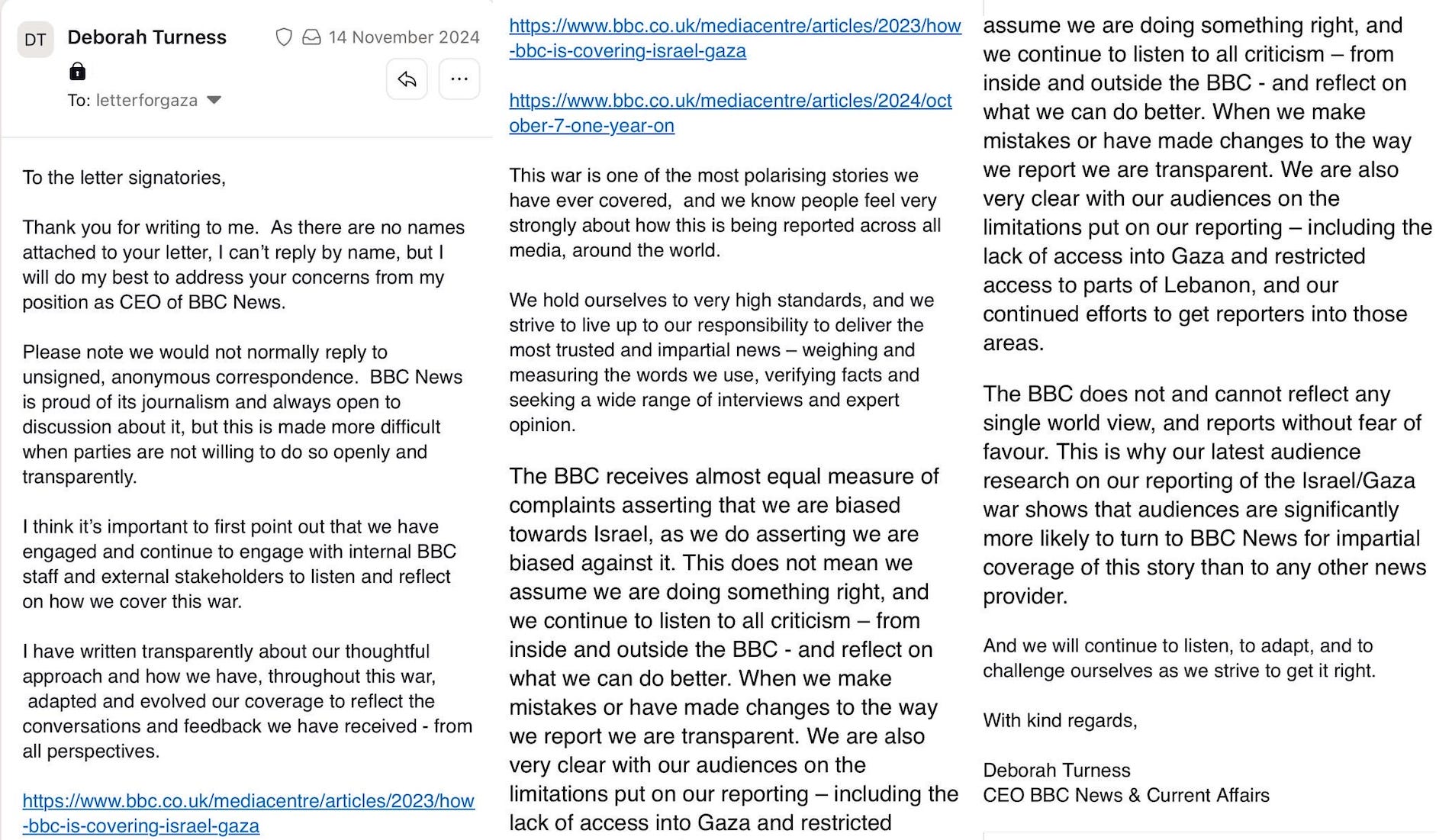
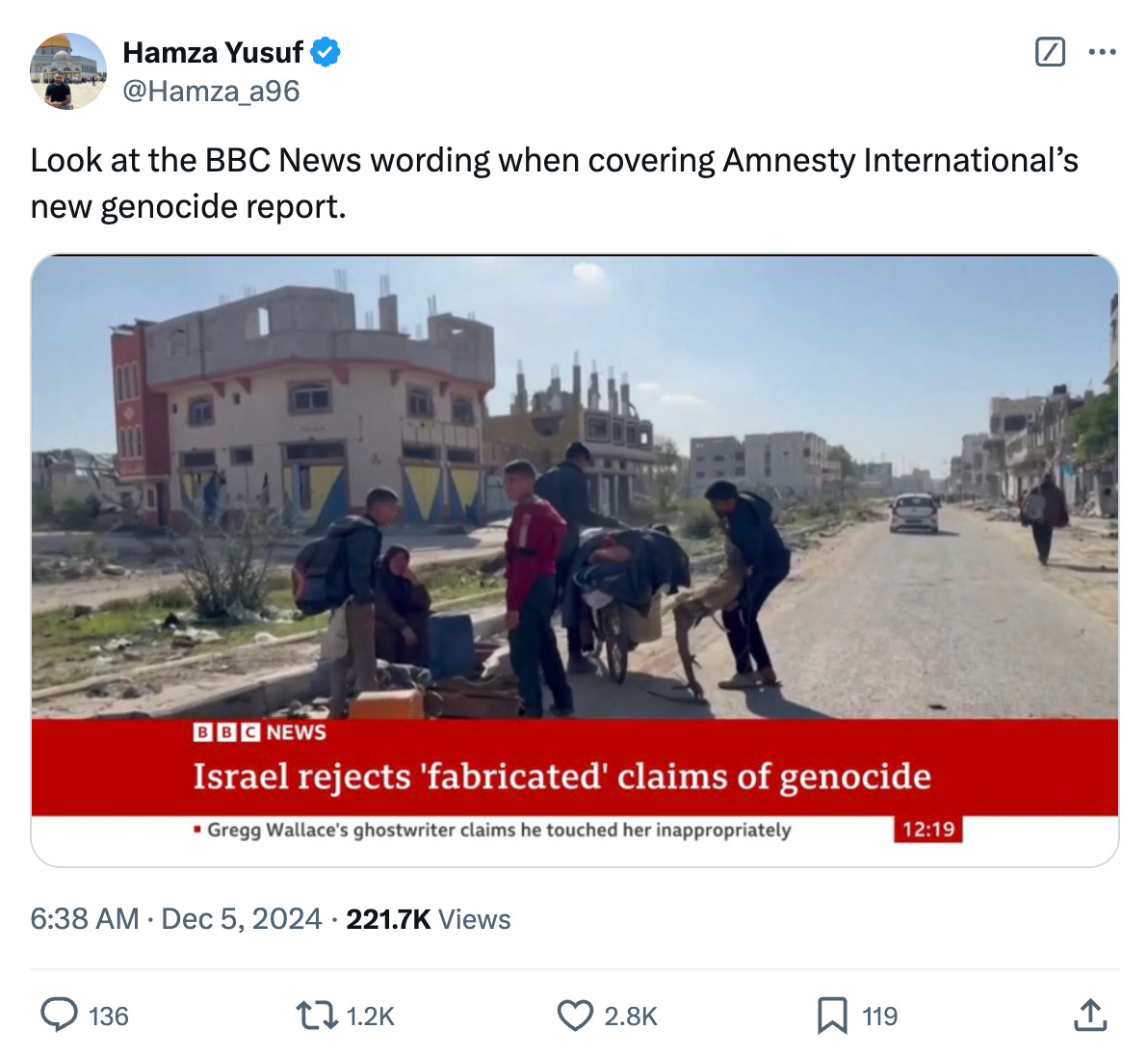
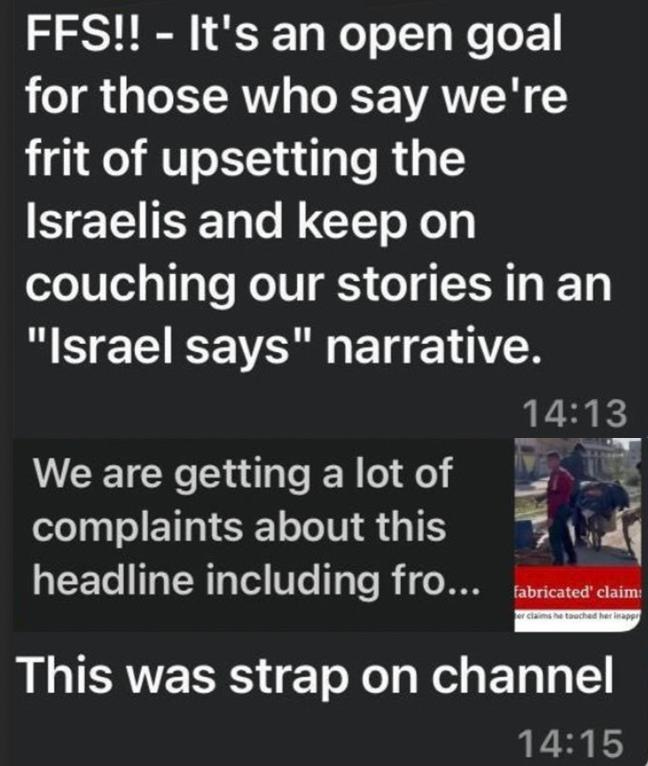
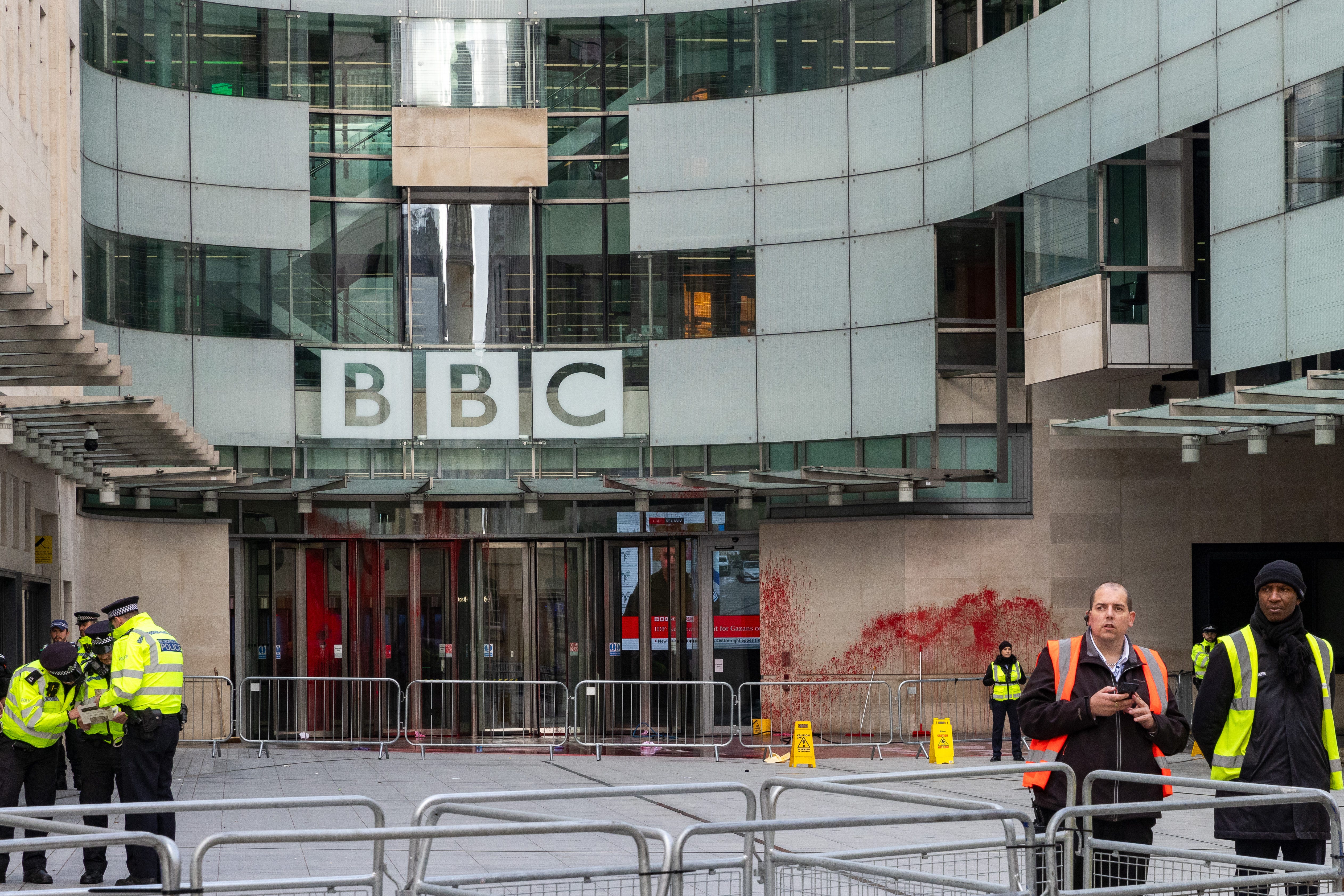
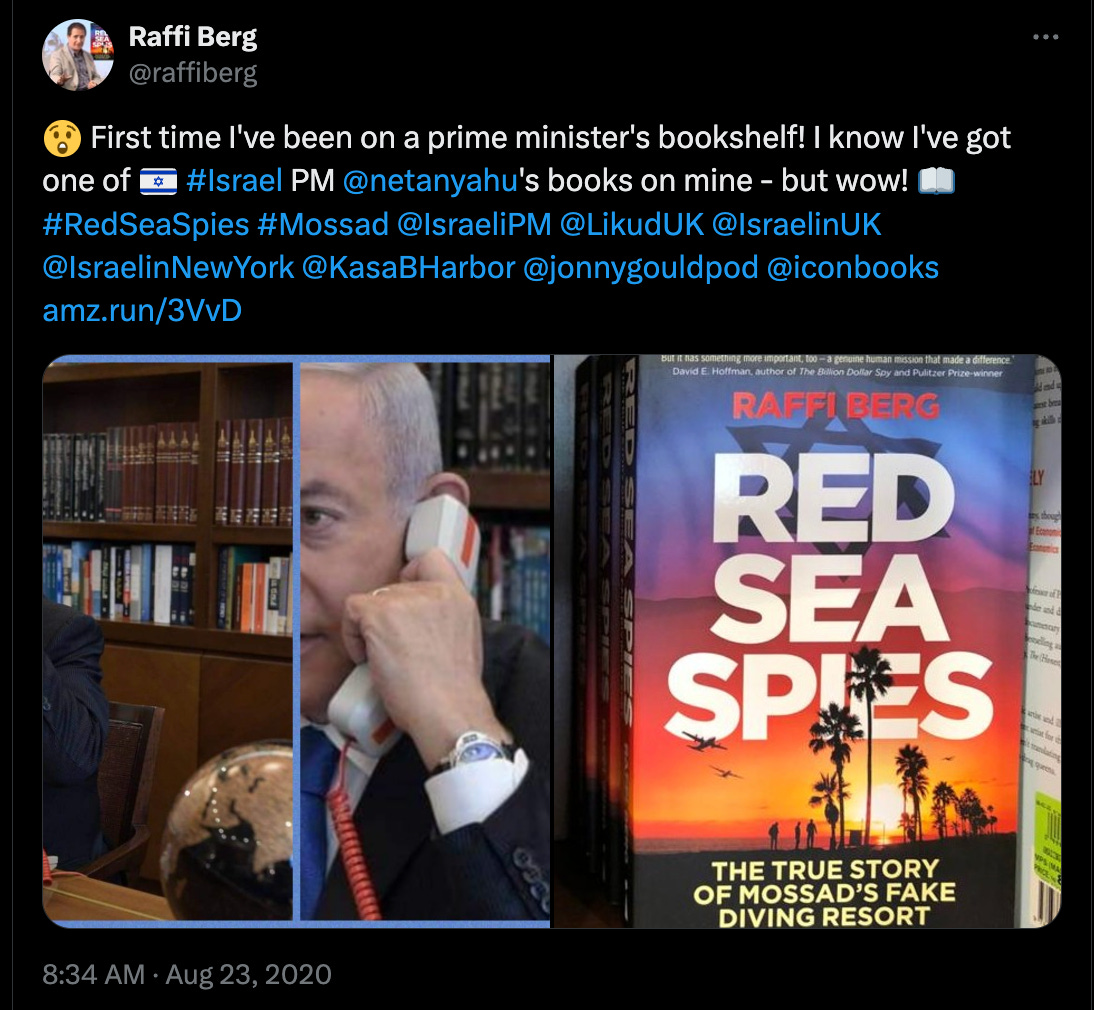
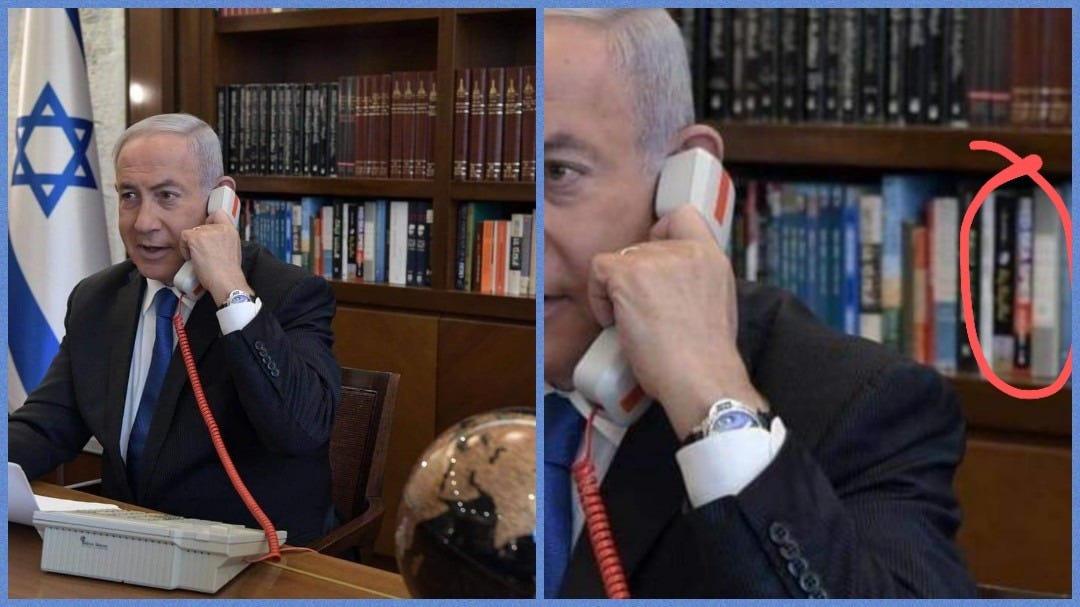
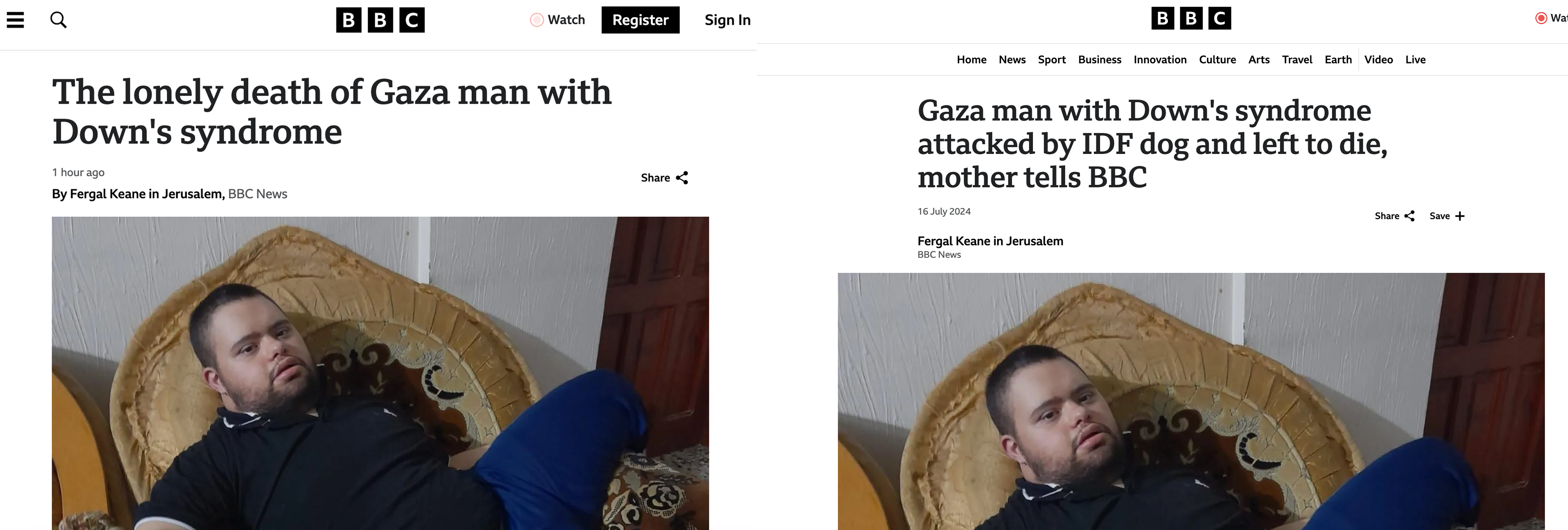
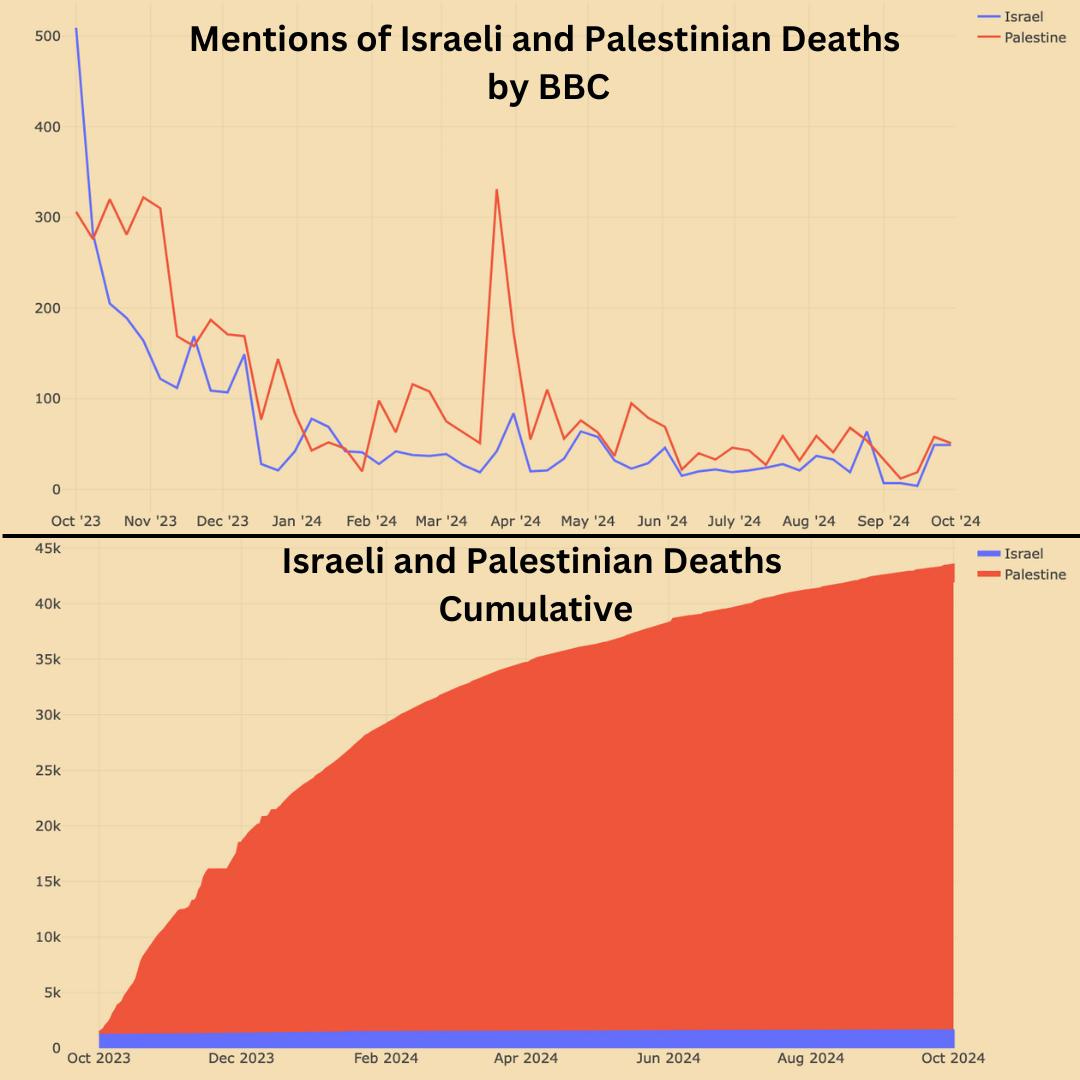
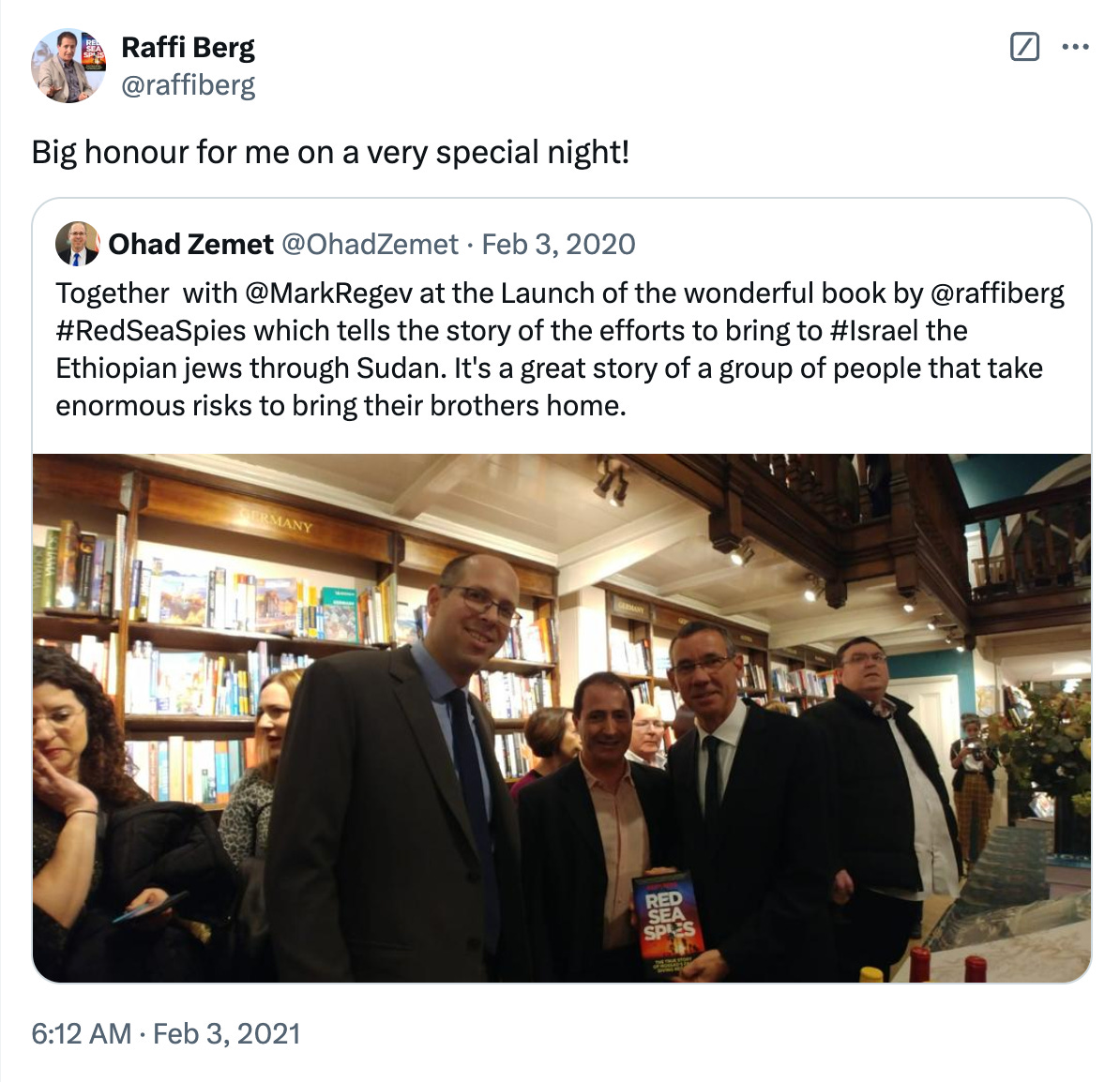

 | truthaholics