“The better view is that the decision to proscribe Palestine Action was not contrary to the policy paper. Given that the Divisional Court held against the Home Secretary on two grounds, showing error on ground 6 alone would not be sufficient for the Home Secretary to succeed on appeal, but nonetheless it remains a crucial starting point to any such challenge.”
“The ongoing complicity of the UK Govt can no longer be ignored or explained away. It has attempted to criminalise the actions of thousands of ordinary citizens who have tried to ensure the UK Govt does everything in its power to prevent and punish the crime of genocide, as is required by the Genocide Convention. Instead, it has failed to prevent and often facilitated the actions of a genocidal, Zionist regime that it still wants to call an international ally.”
Newly-released messages between the far-right former Trump adviser Steve Bannon and the late convicted paedophile Jeffrey Epstein, reveal how Bannon worked with Boris Johnson and Nigel Farage to “overthrow” Theresa May at the height of the 2018 Brexit crisis in the UK.
The messages begin in the days following Boris Johnson’s resignation from May’s Government over her ‘Chequers Plan’ for Brexit and show Bannon detailing his attempt to help remove the then Conservative Prime Minister from office.
From left to right: Nigel Farage, Steve Bannon, Jeffrey Epstein and Boris Johnson
In one message on 16 July 2018, Bannon, who had established a London base in a Mayfair hotel where he met with prominent Conservative and far-right European political figures, tells Epstein that he is in “London with Boris”, while in another message three days earlier he tells him that “We are overthrowing May right now.”
Johnson strongly denied any such collaboration with Bannon or Farage at the time, with his spokesperson telling the Observer in June 2019 that “any suggestion that Boris is colluding with or taking advice from Mr Bannon or Nigel Farage is totally preposterous to the point of conspiracy.”
When questioned later by LBC about reports of his communications with Bannon, Johnson called the claims “the biggest load of codswallop I have ever heard.”
A spokesperson for Johnson did not respond to a request from Byline Times for comment following the release of the Epstein messages.
Bannon’s apparent involvement with Johnson began days after the then Foreign Secretary resigned from May’s Government, describing her Chequers plan as a “betrayal” of Brexit.
In unused footage from the 2019 documentary The Brink, Bannon is recorded telling the documentary makers that he had collaborated with Johnson “all weekend” on his resignation speech.
“Today we are going to see if Boris Johnson tries to overthrow the British Government” he is filmed saying.
“He’s going to give a speech in the Commons. I’ve been talking to him all weekend about this speech. We went back and forth over the text”.
Bannon’s association with Johnson appears to have begun after Trump’s first election victory in 2016.
“Right after we won [Trump’s first Presidency], Boris flew over,” he recalled.
“Because their victory was as unexpected as ours. I got to know him quite well in the transition period”.
Johnson appeared to return the interest, inviting Bannon’s controversial political campaigning company to two meetings at the Foreign Office’s Wilton Park base in 2017.
Previous Byline Times FOI requests for details about these meetings were refused on the grounds of US-UK intelligence and national security concerns.
Alison Klayman, who made The Brink, said that Bannon had been “unequivocal” about his ongoing communications with Johnson.
Other journalists picked up on the relationship. When Bannon was Chief of Staff in the White House, Johnson reportedly developed a natural affinity with him.
Anthony Seldon‘s Johnson at 10 book reported unnamed FCO officials describing Johnson and Bannon as “hitting it off” during this period — finding him both “intriguing” and “distasteful”— while ignoring repeated official warnings about Bannon’s far-right European connections.
“Johnson was reminded by officials [that] Bannon had extensive contacts with the far right in Europe, but ‘it didn’t seem to concern him’ Seldon reported.
After Bannon was fired by Trump in 2017 the Mirror reported that Johnson remained in regular contact with him.
Bannon maintained the association with the then UKIP leader, the Epstein messages suggest.
On 15 July 2018, both men appeared jointly on the radio station LBC, during which they attacked May’s leadership.
Following their appearance, Epstein texted Bannon “Good work on LBC.”
Bannon continued to press for May’s resignation in the months that followed.
On 14 November 2018 then then Conservative MP Jacob Rees-Mogg MP submitted a letter of no confidence to the 1922 Committee chairman in May’s leadership, amid a wave of Cabinet resignations over May’s Chequers plan.
Bannon texted Epstein describing the UK as a “hot mess” and explained: “I’ve gotten pulled into the Brexit thing this morning with Nigel, Boris and Rees Mogg.” Epstein replied, asking if May would survive; Bannon responded, “I don’t see how… Boris; Gove; Rees Mogg; David Davis – somebody has to step up.”
Messages between Steve Bannon and Jeffrey Epstein
The next day the Daily Mirrorpublished a photo of Johnson and Farage sharing what was described as a “cosy chat” at a Belgravia restaurant alongside Johnson’s father Stanley, fueling speculation of a hard-Brexit pact.
A spokesperson for Nigel Farage was contacted for comment.
Bannon continued to claim to be working on May’s removal.
On November 16, Bannon told Epstein that he was still in London because “the guys are trying to move on May today / tomorrow and I’m having a meeting right now”.
Epstein informed the prominent Norwegian diplomat Terje Rød-Larsen that Bannon would not be able to meet up in Abu Dhabi because he was staying on in London “at the request of Boris Johnson”.
Bannon agreed with Epstein that he should stay as long as possible in the UK “so people get the commitment of your follow through”.
Journalist Michael Wolff separately emailed Epstein, positioning himself as an “intermediary with leadership challenger Boris Johnson.”
A month later, in mid December, Bannon appeared to still be involved, texting Epstein that May was struggling and that he could “get Boris across the finish line”.
Email between the journalist Michael Wolff and Jeffrey Epstein
Bannon texted Epstein that May was struggling and that he would soon “get Boris across the finish line”.
May would finally resign the following July, paving the way for Johnson’s elevation to Prime Minister.
The Epstein messages reveal a shared long term interest with Epstein in the long term project of securing a hardline form of Brexit, which May was perceived as being a barrier to.
In the days following the 2016 EU referendum, Epstein had emailed another associate, Palantir founder Peter Thiel, describing Brexit as “just the beginning” of “a return to tribalism, counter to globalisation, amazing new alliances.”
The Epstein files reveal in clearer terms than ever before, just how far those alliances extended.
The Epstein files are full of this word “goyim” and there is a good chance most people have no idea what this word even means. Goyim can be used simply to refer to “nations” or “peoples”, but in this context, it was a slur against non-Jews, an expression of Jewish supremacy.
In 2010, Sephardic leader Rabbi Ovadia Yosef said: “Goyim were born only to serve us. Without that, they have no place in the world; only to serve the People of Israel.”
Epstein casually referred to non-Jews as “goyim” in his email exchanges and contrasted his Jewish associates with “goyim” in intellectual terms. In one conversation, he said “goyim prosecutors” wouldn’t understand his financial schemes.
One of Epstein’s victims — Maria Farmer — said Epstein and Maxwell would frequently use the term “goyim” and saw outsiders as inferior. This claim is supported by Epstein’s emails.
In a 2010 email exchange with Peggy Siegel, Epstein discussed the guest list for a party at his New York mansion, which included Prince Andrew, Woody Allen, and Katie Couric. Siegal asked: “Is it going to be 100% JEW NIGHT?”
Epstein replied: “No, goyim in abundance – jpmorgan execs brilliant WASPs.” WASPs means White Anglo-Saxon Protestants – Epstein was essentially saying these are the acceptable non-Jews, the ones who are worthy of mingling with us.
In a 2009 email discussing finances with Roger Schanks, Epstein wrote: “This is the way the Jew make money … let the goyim deal in the real world.” He was talking of “selling short the shipping futures” (betting on future freight rates and laying off risks). The implication here is that the struggles of capitalism are for lesser humans and people like Epstein get to enjoy easy money. He basically lived up to every antisemitic trope: every negative stereotype associated with Jews was embodied by this man.
It is fair to say that Epstein did the fight against antisemitism no favours, but one person who came out of the Epstein files with his reputation enhanced was another Jew — Norman Finkelstein.
Finkelstein has been a nemesis of Epstein’s lawyer Alan Dershowitz for years, but the Epstein files gave us a glimpse into how these people operate. Harvard professor Robert Trivers tried to bring Finkelstein into the circle, to recruit him like they recruited Noam Chomsky. Basically, these people either bring you in or destroy you. It takes courage to stand up to Zionists and this is exactly what Finkelstein did.
Finkelstein replied to Trivers’ invite:
“My guess is, if Epstein put your daughter at age 15, in such a position, you wouldn’t publicly describe him as a “friend” and person of “integrity”. In fact, I would hope you’d promptly throttle both Epstein and Dershowitz.”
Contrast this level of conviction with a weasel like Keir Starmer who described himself as a “Zionist without qualification” to the Israeli lobby and proceeded to do their bidding, expelling Jeremy Corbyn, supporting Israel’s genocide, and proscribing groups that stood up to Israel. Men like Starmer are useful goyim.
I first encountered the word “goyim” during the Corbyn years when I made the mistake of engaging Zionists on the antisemitism smears. Suddenly, I was being called “goyim” and “goy-boy”. Suddenly, I was being told to “stop goy-splaining”. I had no idea what they meant and when I Googled the words, I was taken aback. I had been perfectly nice and yet these people were using a racist slur against me! This was my first encounter with Jewish supremacy.
I had strongly opposed what Israel was doing to Palestine, but saw Zionism as nothing more than a nuisance domestically. I didn’t realise how much it had infested the UK until there was a huge lawfare effort against supporters of Corbyn and critics of Israel. It was then I realised I wasn’t just dealing with apartheid supporters online, but people who were taking away our freedoms too. It was then I fully understood Zionism is a worldwide problem.
What Epstein and Finkelstein demonstrate is that there is a chasm between principled Jews and Jewish supremacists and one should not be conflated with the other. The thing is we’re not allowed to talk about Jewish supremacy at all. Zionists do not want us to explain the difference because they will always lose the argument on moral and intellectual grounds. At that point, all they have left is censorship.
You will be hard-pressed to find a western leader, or a billionaire, or a media mogul who does not describe themselves as a “Zionist” or side with Israel. You doubt that? Start listing all the exceptions in the comments. I’ll be impressed if you can come up with more than three.
All of us non-Jews outside the Zionist cabal are considered goyim whether we side with Israel or not. These people are running blackmail rings like the Epstein honeypot, lawfare groups like UK lawyers for Israel, and bribery groups like AIPAC. They are the reason our politicians squeak “I stand with Israel” every time the IDF murders children.
Capitulating to Zionism is an act of moral cowardice. It is time we stood up to Jewish supremacy like we stand up to other supremacist ideologies.
[Prefatory Note: This post elaborates upon a lecture of mine on Janurary 26, 2026 at a webinar in a series convened and moderated by the Vietnam Peace Commemoration Committee, which has kept alive the relevance of the Vietnam experience to current struggles. The invitation to me proposed the topic of ‘World Order After Vietnam.’ In this modified text I devote attention to the relevance of world order after 1945, as well as the Vietnam War itself, and subsequent developments.
One point of clarification: We speak of the Vietnam War rather glibly, which glides over the crucial reality that tragic abuse of power is better understood as ‘America’s War in Vietnam.’ Having noted this, I will stick by the standard terminology for the sake of convenience.
Feedback is particularly welcome as I intend to work further on this theme.
I welcome this occasion to be at virtually together with comrades in the Vietnam anti-war movement, and grateful to John McAiliff & Doug Hofsteter for this invitation, as well as Chris Appy who heads the Ellsberg Initiative at the University of Massachusetts at Amherst for illuminating and lucid comments in his role as discussant. I had my doubts as to whether I could meet such a challenge. Part of my predicament in this talk recalled T.S. Eliot’s words to a NYC audience at the start of a poetry reading that I attended over 60 years ago: ‘I am reluctant to make any comments about my poems to an audience that knows more about them than I do.’ In that vein, I realize that there are many with us who have experienced the Vietnam and its aftermath with deeper experience and knowledge than I bring to this challenging topic.]
We are now living through a period of radical uncertainty with respect to the future of world order, an atmosphere agitated by the Gaza Genocide and Trumpism, the resurgence of geopolitical primacy and rivalry, prospects for radical modifications of modernity due to AI and related technological innovations, a transactional and narcissistic US leadership, a discredited and weakened UN coupled with the emergence of cooperative international frameworks, a divided US versus a resurgent China, and a threatening conflict reality that is stimulating increased military spending, new modes of warfare, danger of warfare fought with nuclear weapons. A time of world order transition or rupture, from the end of the Cold War & US dominated unipolarity to a yet unknown future—What does this Trump phenomenon and the Chinese rise portend for the human future?
I think a few brief bullet points on world order before Vietnam would be helpful in giving some background to both changes and continuities relative to world order after Vietnam:
–World Order after WWII was designed by the winners, which defeated hopes for a peace system restraining hard power militarism, in accord with the precepts of political realism that understand international history as largely the story of military superiority and economic inequality as expressed a favorite quote of hyper-realist through the ages, and recently by Henry Kissinger, and now Stephen Miller: “the weak do what they must, the strong do what they will.” Thucydides has been typically interpreted wrongly endorsing this cynical outlaw whereas more careful reading of the context of this adage suggests it is a prophetic warning that such Athenian corrupt behavior with respect to morality will lead to its downfall. The intention, contrary to the amorality of post-Machiavellian realism, was a counsel of moral self-constraint to those with power at a time when the prohibitions of international law did not yet exist.
–the design of the UN could have worked had the winners of World War II acted with moral and now legal self-restraint: permanent veto rights for the winners, criminal accountability for the losers at Nuremberg, Tokyo; it is true that international law seems never to have been intended to displace the geopolitical management of global security by the architects of world order after 1945, but neither was its existence denied; the hope then was that at least the liberal democracies of the West (US, UK, and France) and their allies, would voluntarily exhibit respect for the contemporary code of law and morality as embodied in the UN Charter, and thus comply with international law and morality without burdening the Organization with enforcement duties that would have required a superior military capability even in relation to nuclear superpowers, which would have caused a different set of problems that have been identified by criticisms of world federalism as the solution to peacebuilding challenges.
–In retrospect, we should realize that even the leadership of liberal democracies could not be trusted to comply with international law or observe moral values if in tension with the pursuit of strategic ambitions or the supposed requirements of national security. As a result, it is understandable to blame the leading members of the UN, and not the UN, for its disappointing performance in relation to global security, genocide and ecocide prevention, human rights generally, and peaceful resolution of international conflicts.
–Cold War excesses from the outset suggest wartime trust was dissipated even prior to the surrender of Germany and Japan: covert regime-changing interventions displacing elected leaders: Mosaddeq in Iran (1953); Arbenz in Guatemala (1954); political assassinations Lumumba, Castro Ché Guevera, attempts for both ideological and economic reasons; Soviet failure to hold elections in Eastern Europe and interventions to uphold the pro-Soviet status quo; see James Douglass, Martyrs to the Unspeakable: Assassinations of JFK, Malcolm, Martin, and RFK (2025) interpreting the corrupting impact of these violent killings on progressive politics in the US.
–death rattle of European colonialism but not delegitimized by the UN Charter or among conservative elite circles. The emergence of predatory globalization as legitimized by Clinton, Bush presidencies, neo-con influence favoring Huntington view of Cold War Islamic threat demonized as ‘terrorism’ and associated with Israel’s frontline struggle against suicide bombing reaching a climax in response to Hamas attack on October 7, 2023.
The Pedagogy of the Vietnam War
–Lessons learned by US foreign policy establishment (militarized bureaucracy; Think tanks)—avoid ground warfare & minimize US casualties, abolish the draft, manage media discourse; technological innovations; proxy war option (Ukraine: Biden-fight Russia by arming Uk & discouraging diplomatic compromise); pacify citizen activism; overcame ‘Vietnam Syndrome’ in Iraq War (1991)
–Peace Movement failures: sedated by the ‘Vietnam Syndrome into ‘game over’ delusions, overlooking systemic character of the partnering of militarism, nuclear hegemony, capitalism and political leaders’ short-termism
Major Developments in World Order Since the Vietnam War:
–Vital turning points: end of Cold War; 9/11, Al Qaeda, & Osama bin Laden; Great Terror War; Iraq War and occupation, 2003; rise of & rivalry with China; Ukraine War; Israel’s response to October 7; anti-woke, anti-immigrant politics in liberal West; Abraham Accords and geopolitical deference of Muslim-majority countries to US hegemony; reelection of Trump, 2024; inauguration of Zorhan Mamdani, 2026, ICE rampage, ecological and climate change neglect; global rise of authoritarianism, xenophobia and ultra-right nationalism; transformative technological innovations- AI, robotics, hybrid warfare.
–formal defeat of European colonialism, but not of colonial mentality, generating economic and security residual colonialism in Africa, imperial encroachments elsewhere
–US reliance on economic warfare, principally through sanctions broadly applied and political destabilization; the current Iran Protest Movement
–end of Cold War, Berlin Wall, the Gorbachev vision of a new world order & Russia’s decline, temporary withdrawal from geopolitical rivalry; neoliberal globalization and the deindustrialization of the US, heavy indebtedness, precarious finance-oriented hegemony through dollar after abandoning the gold standard;
–Samuel Huntington’s ‘Clash of Civilizations’ reliance on Israel to fight US proxy wars in the ME; Huntington’s ‘Clash of Civilization’ hypothesis- containing Islam rather than USSR and left ideologies; Israel given a free hand in the region, as well as with Palestine (liberal societies swallow severe legal/moral wrongs of apartheid, genocide, ecocide); containing Islam—Iran, Hezbollah, Syria, Muslim Brotherhood, Egyptian coup; Huntington validated by 9/11 attack, Taliban, ISIS, Hamas.
–US state-building ‘democratizing,’ containment p.us projects: Libya, Iraq (after 2003), Afghanistan, and now Venezuela; chaos, not democracy, state-destroying;
–The anti-apartheid campaign contra South African racism, UN support and global solidarity via boycotts, divestments, sanctions;
–The world order deficiencies as Israel intensifies repressive apartheid policies by recourse to Gaza genocide, with West Bank spillover; discrediting of UN as weak, geopolitically neutralized, and most shamefully, a unanimous endorser of the Trump Plan in the SC 1803 (Nov. 17, 2025), given approval by SG, formation of Board of Peace at World Economic Forum, 2025;
–US withdrawal from and hostility toward ‘internationalism’; started the year by withdrawing participation and funding from 66 international institutional arrangements-31 from within the UN System. These include the Climate Change Framework Convention, WHO, UNESCO; Board of Peace as shift toward what might be called ‘imperial internationalism;’
–Rise and spread of authoritarianism, decline of rule of law internal to the state, from the Orban model to the rightest recent victory in Chile (some friction, Brazil: Lula over Bolsonaro; Trumpism; hard borders; realignment prospects.
–US National Security Strategy 2025: Declaration of Imperial Internationalism
//Venezuelan attack
//US Western Hemisphere preeminence (challenging China’s trade and infrastructure diplomacy of mutual interests
//rejects liberal post-Cold War
What Prospects for New Order
–Spheres of Influence trilateralism
–Imperial Internationalism
–End of NATO and alliance diplomacy; hard and soft power transactionalism; Europe as marginalized; a new state-centric world order
–Rise of Regionalism and Civilizationalism (clash and alliance models)
–UN Reform or Collapse: a reset to moderate geopolitical influence, and restore confidence
–Functional Internationalism: cooperative global problem-solving mechanisms
–Polycentric Balance: Bandung-revived NAM; BRICS; Chinese Development Collective Framework
–Revolt against international payments system as tied to dollar: failure or success
–Extending US Imperialism: Venezuela, Greenland, Canada, Cuba, Iran; and reactions- European realignment, heightened geopolitical rivalry
–Important global challenges: climate change, ecological instabilities; heightened risk of major wars
–key national challenges: reviving democracy and human rights; demilitarization and domestic investment in infrastructures, restored respect for truth and rationality, internationalism, prudent geopolitics; more equitable distributions of wealth and income, defeating the economics and politics of inequality
Concluding Remarks
–a time of radical uncertainty and unparalleled complexity; humility about forecasting the future;
–present world order precarious, unjust, militarized
–nuclear hegemony as geopolitical core of managing global security
I didn’t think I could be any more shocked by revelations in the Epstein files, but the latest have proved me wrong. They show an absolutely corrupt and venal ruling class, with many prominent figures in close relationships with the billionaire convicted sex offender. Names associated with Epstein include fellow billionaires Elon Musk and Bill Gates, former president Bill Clinton, current president Donald Trump, and from Britain Andrew Mountbatten-Windsor, his former wife Sarah Ferguson and one of the most influential Labour politicians for nearly 40 years, Peter Mandelson. Melania Trump sent a warm and friendly email to Ghislaine Maxwell, Epstein’s partner and fellow predator, showing that she also had more than a passing acquaintance with the couple.
We should not perhaps be surprised by the actions of the super-rich. They believe that they have the right to do whatever they want. They have built their fantastic wealth on the backs of the rest of us, and they have a boundless sense of entitlement to that wealth and what goes with it. Alongside that wealth they crave constant recognition, reward, and entertainment. Whether that takes the form of peace prizes, privatised space trips, extravagant weddings and birthday celebrations, they want it all. They believe that they can buy everything that they want – including the commodity of people – for their gratification. What could possibly have attracted them to the wealthy and manipulative Epstein, with his New York mansion, his private Caribbean island, and his network of sex parties and orgies which took place in luxury surroundings?
The victims of the Epstein scandal were young, working-class women, trafficked to perform sex acts across continents. Many of them were as young as 13 or 14, often coerced into doing so or subject to rape and sexual assault. According to the files, Epstein offered Mountbatten-Windsor dinner with a young Russian woman; he also allegedly helped Gates when he contracted a sexual disease from ‘Russian girls’. A second woman has said she had sex with Mountbatten-Windsor in Britain, at the official residence of Royal Lodge.
Mandelson – until September the ambassador to Washington and only last month feted on BBC news programmes – has his reputation well and truly shredded by revelations in the Financial Times that Epstein paid large amounts of money to his husband and an alleged $75,000 dollars to him while he was a Labour MP in 2003 and 2004. He had by then already been sacked from the cabinet for connections with various wealthy businessmen. He doesn’t appear to have declared these donations.
Trump as president is dedicated to acting on behalf of the rich and powerful, the oligarchs and billionaires. We can see this with the war on migrants carried out by ICE, the attacks on workers’ living standards, the imperialist interventions over Venezuela or the gross ‘board of peace’ in Gaza. His Make America Great Again has tapped into working-class discontent, especially in the deindustrialised areas.
While the truly hideous Dorian-Gray portrait of the ruling elite was on full display in the Epstein files, a very different picture of working people could be seen on the streets of Minneapolis. There can rarely have been a wider gulf between Them and Us, between their morals and ours. Where the Epstein files uncovered greed, Minneapolis demonstrated generosity; where the Epstein files showed corruption, Minneapolis showed solidarity; where Epstein practiced exploitation, Minneapolis resisted exploitation.
It is to the immense credit of the people of Minnesota, and to workers across the US, that they are frustrating Trump’s plans. The huge upsurge in opposition to the brutal ICE raids and especially the murders of Renee Good and Alex Pretti in Minneapolis has pushed him back. Now he has been forced to remove the commander of ICE, the ultra hardline Greg Bovino, from Minnesota, promise that ICE operations in the state will end soon, and make placatory noises towards the Democrat governor of Minnesota, Tim Walz. Kristi Noem, head of the Department of Homeland Security, is under pressure to resign or be impeached.
The Trump U-turn came after a remarkable general strike in Minneapolis ten days ago. Last weekend we saw further strike and stayaway action across the country, with mass demonstrations in the big cities across the US. This anti-ICE wave of protests is now huge across the country. The Bruce Springsteen song about the killings epitomises the sense of solidarity felt for the protests. This solidarity incorporates trade unions, communities, school and college students, and many more. It is a class-based action defending a section of the working class under attack because of their nationality, race and migration status. The fact that both those killed were white, US citizens, shows how far this sense of solidarity goes throughout the working class. It is crucial to build on it. One veteran of the 60s movements said that this reminded them of those days and the way that people generalised from one issue to many issues. On 28 March there are ‘No Kings’ demos planned across the US against Trump, which are likely to be massive. He can be pushed back and defeated, not by the feeble Democrat party mainstream but by these expressions of working-class power.
That would be a victory for our side. It would be a defeat for the billionaires, the rich and powerful – and for their idea that we are just pawns in their game. The terrible revelations in the Epstein files can only feed into the mood of discontent and anger which the Minneapolis events demonstrate. And that can only hasten Trump’s demise. Here, we have to campaign for full disclosure about Mandelson. It’s a disgrace that Starmer appointed him as ambassador and that he still sits in the House of Lords as a peer. Instead of being left to resign from Labour, he should have been thrown out of the party and he should have his peerage removed. But he’s only one particularly putrid apple in the barrel. Mountbatten-Windsor encapsulates the arrogance and impunity of unelected royalty. Time for them all to go.
This week: I am speaking at a Cuba Solidarity meeting against any attack on the country by the US, following Venezuela. I’m also committed to organising protests if Trump attacks Iran. And I’ll be speaking at the Latin America Adelante conference next Saturday. I’m also reading on Russian and German revolutionary women, including a newly-translated book by Alexandra Kollontai, which is so interesting.
I attach the full text of Lord Young’s decision granting the Scottish judicial review of the proscription of Palestine.
A few points. Judicial Review can only be granted where the judge believes it has a realistic chance of success. Lord Young evidently believes that we have a realistic chance of success on our three grounds – failure to consult, disproportionate limitation of freedom of assembly, disproportionate limitation of freedom of speech.
This was not even disputed at hearing.
On the disputed points – my standing and the jurisdiction of the court – we won on all points.
Lord Young’s ruling explicitly means that a Scot can always go to Scottish courts against an infringement of their human rights, no matter if identical action is being taken in England. It emphasises the independence and equality of the Scottish judicial system.
On consultation, there is one outstanding fact that I wish to bring to your attention. In England it is being argued – correctly – that while the Home Office consulted the Israeli Embassy, weapons manufacturers and communities including for some reason Lebanese Christians, they failed to consult any Palestinians, any pro-Palestinan organisation, any human rights organisation. They plainly and selectively consulted only those they thought would agree with them.
And to the point here they consulted with nobody – literally nobody – in Scotland. Not the Scottish Government. Not Police Scotland. Not the Scottish counter terrorist strategy board (CONTEST). Yvette Cooper just imposed the proscription on Scotland with no consultation at all.
COS-P1017-25 Pet: Craig Murray for J/R Halliday Campbell WS Office of the Advocate General 26 January 2026 Lord Young
The Lord Ordinary, having considered the petition and answers thereto, and being satisfied that the test in Section 27B(2) of the Court of Session Act 1988 has been met, and for the reasons given in the note attached hereto, grants permission for the petition to proceed; assigns 23 February 2026 at 10am as the date for the procedural hearing; assigns 17 and 18 of March 2026 at 10am as the dates for the substantive hearing; both hearings within the Court of Session, Parliament Square, Edinburgh, and to be held before the Hon. Lord Young; further, makes the following case management orders:-
1. allows parties to adjust their pleadings until two weeks prior to the date of the procedural hearing; and to lodge final versions of their pleadings no later than one week prior to the procedural hearing; 2. appoints parties to mark up any relevant documents to indicate the parts they intend to rely on no later than one week prior to the procedural hearing; 3. appoints notes of argument to be lodged no later than one week prior to the procedural hearing; 4. appoints statements of issues to be lodged no later than one week prior to the procedural hearing; 5. appoints affidavits to be lodged in respect of those facts founded on by a party at the substantive hearing no later than one week prior to the procedural hearing; 6. appoints parties to write to the court to confirm whether they are ready to proceed to the substantive hearing no later than one week prior to the procedural hearing; 7. appoints parties to lodge a list and bundle of authorities, which should be marked up to indicate the parts the party intends to rely on no later than 10 days prior to the substantive hearing. Andrew Young
Note – 1. By interlocutor of even date, and following an oral hearing, I granted permission for the petitioner to proceed with his petition for judicial review as required by section 27B of the Court of Session Act 1988. In this Note, I set out the reasons for my decision.
2. By interlocutor dated 11 December 2025, I asked to be addressed by parties in relation to two issues raised in the Answers lodged by the respondent, namely (i) whether the petitioner had a sufficient interest to give him standing to proceed with this petition, and (ii) whether it was appropriate or necessary for these proceedings to proceed given the existence of identical proceedings in England.
3. At the oral hearing, senior counsel for the respondent took a somewhat neutral position on the question of standing. He noted that the averments in the petition in relation to the petitioner’s standing were brief but acknowledged that affidavits had now been produced which provided more information as to the petitioner’s role as a supporter of Palestine Action. He accepted that the affidavits were truthful and that the petitioner did not have the “busybody” characteristic referred to in some of the legal authorities. After noting that standing is context specific, senior counsel was content to leave the matter for the court’s decision. I did not require to be addressed by senior counsel for the petitioner on this issue. I am satisfied that the petitioner’s role over recent years as an active supporter of Palestine Action and his strategic involvement in some of their protest actions, provides him with standing in relation to an organisation which does not have a conventional structure.
4. On behalf of the respondent, I was informed that the judicial review proceedings before the High Court in England had involved a hearing over three days in November and December 2025. One day of those proceedings had taken place under the closed material procedure. The judgment was still awaited. An appeal might reasonably be anticipated to the Court of Appeal, or potentially direct to the Supreme Court. On behalf of the respondent, it was argued that the issues within the current petition are identical to those heard in the English court. There is no bespoke Scottish argument which merits separate proceedings in Scotland. Any proceedings in Scotland are likely to require closed material procedure for part of the hearing which will present practical difficulties. I was referred to R (Liberty) v Prime Minister & Anor [2020] 1 WLR 1193 at paras [26]-[31] in which the Court of Appeal discussed certain matters of policy where issues common throughout the UK are the subject of judicial review proceedings in more than one UK jurisdiction. Senior counsel for the respondent identified three potential ways forward. The first option was to refuse the petitioner permission to proceed. The second option was to reserve the issue of permission and sist the current cause until a decision was available in the English proceedings. The third option was to grant permission followed by an immediate sist until the decision in the English proceedings was available and had been digested.
5. Senior counsel for the petitioner submitted that the relevancy of the English proceedings was unfocussed in the respondent’s Answers. The existence of the English proceedings had not been advanced as the basis for any plea-in-law challenging this court’s jurisdiction. It was observed that any decision in England could not found a plea of res judicata in Scotland. A Scottish court would not be required by precedent to follow any decision of the High Court in England. There had been a number of recent examples of important constitutional challenges proceeding in parallel in Scotland and England. Those cases demonstrated that different decisions might be taken in the lower courts for ultimate adjudication in the Supreme Court. While the current petition did not include an argument peculiar to Scots law, it could not be ruled out that adjustment of the petition might introduce an issue which was not before the English courts. In relation to the decision in R (Liberty) v Prime Minister, this was a decision of the Court of Appeal on a case management issue. The Court of Appeal had not had the benefit of a full citation of the relevant authorities. The proscription of Palestine Action directly affected a number of individuals in Scotland who were facing criminal prosecutions. They had a right to have this restriction on their legal rights challenged before a court in Scotland. The court should grant permission. The respondent’s subsidiary motions for a sist should also be refused for the same reasons.
6. I am sa tisfied that it is appropriate to grant permission for this judicial review to proceed in Scotland notwithstanding the existence of English proceedings which are at a more advanced stage. As a matter of principle, a petitioner who has standing and whose petition sets out arguments of sufficient merit to satisfy s27B(2)(b) of the 1988 Act should not be refused permission because of the existence of parallel proceedings in another UK jurisdiction. The petitioner claims that his legal rights have been illegally circumscribed by the 2025 Order. He is entitled to look to the courts of his place of residence for a determination of that complaint. The cases of Cherry v Advocate General 2020 SC 37 and R (Miller) v Prime Minister [2019] EWHC 2381 support the petitioner’s argument that there is nothing inherently objectionable with proceedings on the same issue progressing through different jurisdictions within the UK at the same time. There is no suggestion that these proceedings are being advanced for an improper or abusive purpose such as a campaign to swamp the respondent with a multitude of proceedings. The possibility that any substantive hearing in this petition will require the adoption of closed material procedure is not a factor of any weight to the issue of permission. The necessary arrangements will be put in place if the closed material procedure is required.
7. I did not find the decision in R (Liberty) v The Prime Minister to be of any direct assistance to the issue before me. It involved discussion of a request for an expediated hearing in judicial review proceedings where similar proceedings had already been completed before the Outer and Inner Houses of the Court of Session. The case was not concerned with the granting of permission to proceed under the relevant English rules. It involved a discussion of case management issues in a case already proceeding through the courts. Wider issues are involved, including judicial resources, when an issue of case management is under consideration.
8. For these reasons, I grant permission for the petition to proceed. For the avoidance of any doubt, my decision is not influenced by the suggestion tentatively floated by senior counsel for the petitioner that the petition might yet be developed to include a Scottish angle to the arguments.
9. I also refuse, in hoc statu, the respondent’s motion that these proceedings should be sisted. As observed above, case management may involve consideration of factors beyond those relevant at the permission stage. I am not satisfied that it is appropriate to sist these proceedings immediately after granting permission. The better course of action is for parties to proceed through the usual stages of a procedural hearing towards a full substantive hearing which I shall provisionally fix for 2 days. This procedure will enable the final shape of these proceedings to be better understood. It is, of course, open to either party to seek a sist or some alternative procedure once there is clarity as to the position in England. Any such motion would be considered on its merits at that time.
Author: Lauren Bell Cunningham This document has been electronically authenticated and requires no wet signature.
IN THE COURT OF SESSION AFFIDAVIT OF HUDA AMMORI IN THE PETITION of CRAIG MURRAY, residing at Edinburgh, EH10 PETITIONER For judicial review of the Terrorism Act 2000 (Proscribed Organisations) (Amendment) Order 2025 At on the NINTH day of JANUARY 2026, in the presence by way of remote video conferencing software of Lynn Littlejohn McMahon, solicitor and notary public, Halliday Campbell WS, solicitors, Edinburgh, EH16, COMPEARED HUDA AMMORI, who being solemnly sworn hereby DEPONES as follows:-
1. My name is Huda Ammori, I am a co-founder of Palestine Action.
2. Palestine Action was a network of individuals and groups which supported, and took, direct action against weapons companies which were involved in the destruction of Palestine and the ongoing massacres of the Palestinian people.
3. The group’s main focus was the Israeli weapons industry operating in Britain. Specifcally, Elbit Systems, which is Israel’s biggest weapons manufacturer.
4. Craig Murray and I had met in person when myself, Richard Barnard (also a co- founder of Palestine Action), and others, were housed together for The World Transformed festival in Liverpool. We were all there as speakers for various parts of the event.
5. During this time, we had exchanged contact details and I had asked Craig Murray if he would support us in increasing awareness of the various court cases that were taking place as part of Palestine Action. He was happy to help, and ever since, had become very involved in Palestine Action.
6. In May 2023, Craig Murray was also part of a mass protest action by Palestine Action against UAV Tactical Systems, a subsidiary of Elbit Systems. The protest was publicly called for by Palestine Action, for supporters of the network to attend and be a part of the action, all of which was under the Palestine Action banner.
7. The purpose of the mass action, was for people to hold a constant presence outside the factory to disrupt the production of Israeli drones. Not only was Craig Murray a part of this action, he had also reported on it for his blog: https://www.craigmurray.org.uk/archives/2023/05/freedom-of-speech- elbit-and-fascist-policing/ (print-out annexed hereto)
8. In the summer of 2023, both myself, Richard Barnard and Craig Murray were speakers at ‘The Rebel Tent’, a part of the Beautiful Days festival. During this time, Craig Murray had also spoken to the crowd about Palestine Action’s aims and objectives.
9. As part of his solidarity work with Palestine Action, Craig Murray would also attends trial in support of those facing criminal charges for taking direct action. This included the plea hearing of Richard Barnard, who was facing charges relating to two speeches he had made in support of Palestine Action in October 2023.
10. Craig Murray had supported Richard Barnard, as he did with many people facing criminal charges for their involvement with Palestine Action. He was part of the protest at the Old Bailey for Richard Barnard, with myself. He had also raised awareness of the proceedings online, through his large platform, which also significantly helped mobilise support for the case.
11. It’s important to note that the slogan ‘We are all Palestine Action’ was popularised, as the network encompassed those taking direct action and joining protests, and those also supporting the court cases and spreading awareness of the aims of the group and the challenges we faced.
12. Not only was Craig Murray actively supporting Palestine Action online, sharing actions, and raising awareness of Palestine Action’s aims and strategy, he also had joined the mass action himself against Elbit Systems’ UAV Tactical Systems factory.
13. I also consider him a close friend and a confidant, who I would regularly speak to about the challenges myself and others personally faced due to state repression of Palestine Action. For the above reasons, I believe it is clear that Craig Murray was both involved and an active supporter of Palestine Action and is therefore extremely well placed to legally challenge the proscription of Palestine Action.
All of which is truth as the deponent shall answer to God.
Declared by way of video conference, and signed electronically this NINTH day of January 2026 at Glasgow before me, Lynn Littlejohn McMahon, Solicitor and Notary Public, via video conference which I attended at Glasgow, G11 Lynn Littlejohn McMahon Edinburgh Solicitor and Notary Public
IN THE COURT OF SESSION
AFFIDAVIT OF CRAIG JOHN MURRAY
IN THE
PETITION
of
CRAIG MURRAY, residing at Edinburgh EH10
PETITIONER
For judicial review of the Terrorism Act 2000 (Proscribed Organisations) (Amendment) Order 2025
At Edinburgh on the NINTH day of JANUARY 2026, in the presence of David James Finlay Halliday, solicitor and notary public, Halliday Campbell WS, solicitors, Edinburgh, EH16 5PQ, COMPEARED CRAIG JOHN MURRAY, residing at Edinburgh, EH10 who being solemnly sworn hereby DEPONES as follows:-
I am Craig John Murray, born 17 October 1958, resident at 63 Oxgangs Road Edinburgh EH10.
I am a journalist in alternative media, retired diplomat and British Ambassador, and a campaigning political activist.
I have a particular interest in Palestine having campaigned on the issue since I first joined the Friends of Palestine in 1977, with a hiatus during my period in the FCO. I also have a particular long-term interest in freedom of speech issues.
I supported Palestine Action since its inception. I had frequently for decades expressed the view that Palestinians have been subject to ethnic cleansing and genocide for over seven decades. This did not start on October 7 2023. I therefore strongly supported the efforts of Palestine Action to disrupt the Israeli defence industry’s procurement and manufacturing infrastructure in this country.
I still support direct action against Israeli interests, in particular in view of the accelerated genocide of the last two years. I believe that the proscription of Palestine Action constrains my human right to freedom of expression, as a part of its general chilling effect upon journalism and upon individuals.
As my main income comes from subscriptions to my published blog, the curtailment of my ability there to write of ..redacted.. Palestine Action also affects my professional career and directly my income.
I do not support terrorism nor violence against individuals; neither does Palestine Action. The notion that constraining my human right to express my views is a necessary measure to combat terrorism is, in my view, absurd.
I was myself subject to detention under Section 7 of the Terrorism Act at Glasgow Airport on 19 October 2023, and questioned by police on my views and activism on Palestine. My mobile telephone and laptop computer were confiscated and I received a letter stating I am under continued investigation (which to my knowledge has not been closed).
The United Nations has queried with the British government the arbitrary nature of my de facto arrest in a letter dated 4 December 2024 which it sent to the British Government. A copy of the letter is produced as Annex 1 to this Affidavit.
On 10 and 11 May 2023 – over two years before proscription – I participated in a Palestine Action picket at the Elbit factory outside the city of Leicester. Elbit is Israel’s leading weapons manufacturer and responsible for many of the weapons that have been massacring tens of thousands of civilians in Gaza.
As is the case with the vast majority of Palestine Action events, this was an entirely peaceful protest. Over the two days I was there it consisted of nine people, on the pavement opposite the factory, causing no disruption whatsoever. Nonetheless the police attempted to disperse us, my first encounter with the gross abuse and denial of citizens’ rights in the UK in support of the Israeli defence industry.
I published immediately two articles on my website detailing my experience, stating that this was a specifically Palestine Action event and providing a link to Palestine Action’s website. My articles make clear that I was there as a supporter and activist, not merely as a journalist. Copies of the articles, titled “Freedom of Speech: Elbit and Fascist Policing” and “Now Protest Is a Moral Duty”, are produced as, respectively, Annex 2 and Annex 3 to this Affidavit.
Almost since its foundation I have had direct contact with Palestine Action’s founders, Richard Barnard and Huda Ammori. I have shared a flat with them when lobbying the Labour Party conference in Liverpool almost three years ago. I have advised them on legal representation. I have turned up to support Richard when he was charged with terrorism offences at the Old Bailey, and spent some hours strategising with them after that event.
I have attended the hearings at the High Court and Court of Appeal in London on the proscription of Palestine Action, reported on them, and discussed legal strategy for the plaintiff Huda Ammori with both Huda Ammori and, with Huda’s consent, directly with Gareth Peirce, Raza Husain KC and Blinne Ni Gharaligh KC.
Palestine Action did not have a membership structure. I was therefore not a member before its dissolution. I was however an active collaborator.
I was in the public gallery at the International Court of Justice in the Hague for the hearings in South Africa vs Israel on Israel’s alleged breach of the Genocide Convention.
From October 2024 to February 2025 (with a short festive season break) I was resident in Lebanon reporting from the ground on Israeli attacks on Beirut, the Bekaa Valley and Southern Lebanon.
I am concerned at the extreme and disproportionate effect of the proscription of Palestine Action not just as a supporter of Palestine, but also as a supporter of free speech. I have written frequently on freedom of speech and assembly issues.
Notably I have published articles on individual attacks on free speech, such as the prosecution of Mark Hirst. On March 21 2024 I published an article attacking Scotland’s new hate speech legislation on freedom of speech grounds. I take the unfashionable view of defending the free speech even of those with whose views I profoundly disagree – for example I published an article against the imprisonment of Lucy Connolly. A copy of these articles, titled “Scotland’s Hate Speech Act and Abuse of Process” and “Lucy Connolly Should Be Released” are produced as, respectively, Annex 4 and Annex 5 to this Affidavit.
I would argue that anybody whose rights are constrained by the proscription of Palestine Action should have standing to challenge it. That an executive action which limits the rights of everybody equally cannot be challenged as it therefore does not limit the rights of anybody in particular, is an absurd contention.
But if particular status is needed I have it. I have participated in Palestine Action protests and have demonstrably supported them. I am a colleague and collaborator of Palestine Action’s founders. I am a journalist whose freedom of expression is being curtailed disproportionately. I have a demonstrable long term particular interest in Palestine and in Article X and XI freedoms.
I am a Scot. I live in Scotland. Scotland is where I wish to publish my views redacted Palestine Action. Scotland is where my established Article X and XI human rights are being infringed.
I wish to seek the protection of the courts in my own jurisdiction against executive infringement of my rights within this jurisdiction.
As I understand it, the Scottish courts are not subservient or junior to the courts of England and Wales. Their opinion is equally valid and – crucially – the courts of Scotland have the absolute right to take a different view, even in a very similar or identical matter, to the court of England and Wales.
The disproportionate effect of the proscription of Palestine Action on individuals in Scotland has been appalling. Scores of peaceful people of entirely good character have been arrested on absurd pretence of “terrorism”.
Terrorism related charges are life changing. They do not only bring potential imprisonment. They bring loss of employment, debanking and loss of access to money, and severe international travel restriction.
I have met entirely decent people in Scotland who have suffered all these consequences of the proscription. I have met an elderly female pensioner whose home was raided and searched by counter terrorism police in the early hours in front of her young grandchildren.
On 18 August 2025 I travelled to Dunoon for the court appearance of Bill Williamson, aged 73. Bill had been arrested in Dunoon High Street on 16 August 2025 at a regular weekly vigil for Palestine, for displaying a sign allegedly supporting Palestine Action. He was handcuffed in public and led away by four policemen. He was told he was arrested for a terrorism offence.
Bill, a man of impeccable character who is a stroke victim, was kept in the police cells all weekend, for two nights, with no food given to him suitable to his diet. He was produced at Dunoon Sherrif Court on Monday afternoon but released without – so far – any charge. This kind of disgusting treatment of a respectable elderly Scottish citizen exercising the right of peaceful protest and assembly in a small town like Dunoon is precisely the kind of disproportionate nonsense I want a judicial review to stop. A copy of the article published on the website of the Dunoon Observer and Argyllshire Standard on 21 August 2025, titled “Dunoon’s pro-Palestine protestor ‘liberated’” is produced as Annex 6 to this Affidavit.
It is not only those accused of supporting Palestine Action who have suffered dreadful abuse of their rights in Scotland since the proscription. Prior to the proscription, nobody taking direct action against the Israeli arms supply chain in Scotland had been charged with terrorism related offences.
On 17 July 2025 three women were arrested in a direct action at Leonardo weapons factory in Edinburgh which allegedly slightly damaged a security fence. The action is not alleged to relate to Palestine Action.
Nevertheless the women were treated as terrorism offenders and their treatment by police was appalling. They were transferred to Govan Police Station where they were held in the special terrorism unit without charge for five days. They were held incommunicado in this time.
At the request of the support group for the women and of the women’s families, with which I had direct contact, I arranged for the best available legal representation for the women. However the police refused to pass on the details of the arranged legal representatives to the women.
They also refused to allow their families to contact the women. I had given details of the arranged legal representatives to the families but the police also refused to allow the families to communicate this to the women. They therefore arrived in court for charging unaware that alternative legal representation had been arranged for them to the standard duty solicitors with which they had been provided.
I understand that this keeping of the women incommunicado and therefore not allowing them information on choice of legal representation was entirely because of the different way alleged “terrorists” are treated.
The women were informed by police they were being charged under the Terrorism Act, but at the court itself they learned that this had been replaced by charges “aggravated” by terrorism.
The Scottish Counter Terrorism Strategy Board (CONTEST) includes the Scottish Government, Police Scotland, security services, COSLA and others ( I believe including the Crown Office). The CONTEST minutes for May 2025, released under the Freedom of Information Act, include the following:
“Palestine Action Group (PAG)
Palestine Action are extremely active in Scotland, particularly within the protest activity space. This is a co-ordinated group, which is known for escalating violence in other parts of the UK.
Currently within Scotland, this group has been focused on protest activity which has not been close to meeting the statutory definition of terrorism; CT policing continues to monitor their activity and are prepared to intervene where necessary”
A copy of the extract of the minutes is produced as Annex 7 to this Affidavit.
Five UN Special Rapporteurs have submitted to the English judicial review that UK counter-terrorism legislation fails to meet international standards in conflating property damage not endangering life with terrorism. A copy of a press release titled “UN experts urge United Kingdom not to misuse terrorism laws against protest group Palestine Action” issued by The Office of the United Nations High Commissioner for Human Rights on 1 July 2025 is produced as Annex 8 to this Affidavit.
The UN High Commissioner for Human Rights himself, Mr Volker Turk, has urged the UK government to rescind the proscription, stating:
“I urge the UK Government to rescind its decision to proscribe Palestine Action and to halt investigations and further proceedings against protesters who have been arrested on the basis of this proscription. I also call on the UK Government to review and revise its counter-terrorism legislation, including its definition of terrorist acts, to bring it fully in line with international human rights norms and standards.”
A copy of a press release titled “ UK: Palestine Action ban ‘disturbing’ misuse of UK counter-terrorism legislation, Türk warns” issued by The Office of the United Nations High Commissioner for Human Rights on 1 July 2025 is produced as Annex 9 to this Affidavit.
In the Scottish legal tradition sovereignty rests with the people, not with the Crown in parliament.
In the English legal and constitutional tradition, parliament may do anything, be it ever so authoritarian. Parliament could legislate to repeal the Human Rights Act or cancel elections, and English courts would likely uphold that if properly passed through parliament and approved by the Crown.
I believe that the Scottish tradition of legal thought and practice should and does provide greater protection for the people from arbitrary and oppressive government, as expressed in the still in force Claim of Right. That is why I believe it is important for a Scottish court to hear this judicial review in Scotland for theprotection of the people of Scotland from what I see as an arbitrary, oppressive, politically motivated and intellectually absurd executive action.
This affidavit addresses the issues of standing for the hearing on 12 January, not the whole matter for judicial review.
All of which is truth as the deponent shall answer to God.
Signed this ninth day of January 2026 at Edinburgh
before me, David James Finlay Halliday, Solicitor and Notary Public
Edinburgh
IN THE COURT OF SESSION
AFFIDAVIT OF DR ELIZABETH JANE ELDRIDGE IN THE
PETITION
of
CRAIG MURRAY, residing at Edinburgh, EH10
PETITIONER
For judicial review of the Terrorism Act 2000 (Proscribed Organisations) (Amendment) Order 2025
At GLASGOW on the EIGHTH day of JANUARY 2026, in the presence of Lynn Littlejohn McMahon, solicitor and notary public, Halliday Campbell WS, solicitors, Edinburgh, EH16 COMPEARED DR ELIZABETH JANE ELDRIDGE, Glasgow, G44 who being solemnly sworn hereby DEPONES as follows–
My full name is Dr Elizabeth Jane Eldridge. I am also known as Lizzie Eldridge. My date of birth is 4 December 1967. My home address is Glasgow, G44.
I am a writer, a business English teacher and a former university lecturer. I obtained an MA(Hons) from the University of Glasgow in sociology and theatre in 1988,and then obtained a PHD from Lancaster University in 1993.
1 am currently the Vice President of the Scottish branch of PEN International. PEN is an organisation that defends freedom of expression and campaigns on behalf of writers suffering censorship, oppression, imprisonment and even death. I lived in Malta for 12 years and came back to Scotland at the end of 2019. I got involved with Scottish PEN almost immediately upon my return, and I have been Vice President for one year now.
I’ve always been involved in Human Rights since I was in my teens. To my shame, Palestine largely disappeared from my line of vision for a while until the May 2022 assassination of the Palestinian journalist Shireen Abu Akleh by the IDF. I was heavily involved with Scottish PEN by then. I alerted them and we arranged for a statement to be put out. When the genocide of the Palestinian people began in Oct 2023, I got involved in protests at that stage, and I have been doing everything that I can since then to help, including writing for the Palestine Chronicle and appearing on the Palestine International Broadcast.
I know of the Palestine Action group, but I am not directly involved with them. I do have connections with people formerly involved with Palestine Action, but I have never been involved in any direct action or anything like that myself.
I have a friend from Edinburgh who has been in prison since August 2024. She was allegedly one of the activists who took direct action at the Elbit Systems factory in Filton, Bristol. She is known now as one of the “Filton 24”. Arrested under the Terrorism Act(2000), she has been detained since then without trial, and has been deprived of basic prison rights and bail. Her period of detention, like that of her co-defendants, far exceeds the maximum 6 month period of detention, and the treatment of the Filton 24 (then Filton 18) has been strongly criticised by UN Human Rights experts [https://www.middleeasteye.net/news/un-experts-intervene-filton-18-palestine-action-case] (Annex 1 hereto)
The Filton action was prior to the proscription of Palestine Action as a terrorist group, but I feel this was part of the build up to proscription.
In the space of one year, since November 2024, I have been arrested three times. I had never been arrested or in any trouble with the law before that.
Since the genocide in Palestine began, the Scottish Palestine Solidarity Campaign and the Gaza Genocide Emergency Committee (“GGEC”) have been holding weekly protests outside 8arclays Bank in Glasgow. I participate in the protests weekly. On 2 November 2024, the protest had just ended, and we were all heading home,when suddenly people started shouting about someone being arrested. It was a young Palestinian woman who is a friend of mine. I asked the police what they were doing, and under what powers they were arresting my friend. There were three male police officers arresting her. I put my hand on her arm whilst I was talking. The police said that if l didn’t remove my hand they would arrest me. I said that she hasn’t done anything wrong. They arrested me for“obstruction” and put me and my friend in handcuffs in Argyll Street, put us in a van, and took us to Govan Police Station. I was held in a cell for 5hours. It was not a nice experience. I was given very restrictive bail conditions, which I eventually had to accept, rather than stay in the cell until Monday. One bail condition was that I wasn’t allowed in Glasgow City Centre at all. Three weeks later, I went to court and thankfully the Sheriff agreed that the bail condition was too restrictive and that was overturned.
I was back in court in January 2025 for a pre-hearing, and that’s when I discovered that a new charge of breach of the peace had been added to the obstruction charge. I represented myself, and I pled not guilty. The next time I appeared in court was in May 2025. The police gave evidence saying”all hell broke loose” but the video evidence showed very clearly that we were not causing any problems at all. The Sheriff said that senior police “gave unreliable evidence” which I understand to be as close as a Sheriff can get to saying that they lied. The Sheriff also allowed evidence from the bank manager of Barclays, who said that he didn’t see me cause any disturbance. I was acquitted of Breach of the Peace, but I had to return to court in August with letters of support re the obstruction charge. The Sheriff was satisfied that I was of good character, and gave me an absolute discharge. It was a huge relief.
In between all that, in April 2025, I took part in a protest at Aberdeen Bowling Club, against an Israeli player taking part in an International Bowling Competition. Petitions had been signed trying to prevent him taking part, but he did anyway. In the end, I ran onto the green with a Palestine flag my friend had hidden when we went in as spectators. I made my objections clear by shouting, and I was arrested and put in a van. The police never did take me to a police station though, they just let me out the van. I call this my “invisible arrest”.
My third arrest was on 6 September 2025. I was attending a protest in front of Queen Elizabeth House on Sibbald Walk in Edinburgh. It was a protest organised jointly by Defend our Juries, and the Scottish Palestine Solidarity Campaign. Some people had placards saying, ”I oppose genocide, I support Palestine Action. I didn’t have a placard. I was standing at the back, wearing a t-shirt, which read “Genocide in Palestine, Time to Take Action”. The words “Palestine” and “Action” were both written in a larger font. According to the police citation, ’you LIZZIE ELDRIDGE did wear an item of clothing namely, t-shirt in such a way or in such Circumstances as to arouse reasonable suspicion that you were a member or Supporter of a proscribed organisation as defined by the aforementioned Act namely, Palestine Action, in that you did wear said t-shirt; CONTRARY to the Terrorism Act 2000, Section 1 3 (1) (a) as amended’
I was not arrested there and then, nobody was. I was actually thinking at the time, “what a shame for the placard guys, no doubt they will cop trouble for that”, as I knew Palestine Action has been proscribed as a terrorist group by then. However, nearly two weeks later, there was a knock at my door whilst I was teaching a student business English in an online session. It was two plain clothed police officers. They started talking about the protest in Edinburgh, and I said the timing “was inconvenient, could they come back in 10 minutes, after my lesson”, and they agreed. When I opened the door 10 minutes later, they were standing in precisely the same positions I had left them. They said they were there to arrest me under the Terrorism Act. Again, I said the timing was inconvenient, I had other lessons, and asked them to come back at 1pm. They agreed. It was all a bit farcical. as the police were very apologetic when they came back, and they were perfectly nice, and even asked me for directions to Cathcart Police Station, as they were from Edinburgh. I wasn’t handcuffed, I was only in the police station for an hour, and after taking my mugshot and fingerprints, they let me go, with no bail conditions. Which I found to be pretty surreat if they really thought me to be a terrorist.
In December,a counter terrorism police document was leaked, which gave advice to the police on how to deal with protestors post proscription of Palestine Action. The wording on my t-shirt was specifically referred to, and was said explicitly not to be an arrestable offence. https://www.declassifieduk.org/palestine-action-policing-guidance-suggests-protesters-wrongly arrested/j (Annex 2 hereto) However,I (together with a number of others in a similar situation) received letters from the police, claiming that they could take action against us, but they would offer to just give us a warning for potential terrorism instead. We all decided that there was no way we were agreeing to that. A warning stays on your record for 2 years and can be used against you. We met and symbolically burned our letters at a public protest in Edinburgh on 22 November 2025.
Then, on the Saturday before Christmas there, I received a police citation giving me a court hearing date of 21 January 2026.
On a personal and professional level, I would say that thèse experiences have led me to be shocked at the erosion of human rights and civil liberties in our country.
Truth as solemnly declared
before me, Lynn Littlejohn McMahon, Solicitor and Notary Public
Edinburgh, EH16
I am very optimistic now we have won this stage. But I am afraid the full judicial review is going to be very expensive. We need everyone who can contribute to contribute, even if it is only a pound, dollar or euro. And we need everyone who already contributed to think of another person who they can ask to contribute. All of us have to look towards people we know of good heart with means.
If we succeed, we will save many scores of people from the life changing consequences of a terrorism sentence and from possible jail. But PLEASE do not contribute if you really cannot afford it – we are trying to make people’s lives better not worse.
I know these are the most difficult of times. But that is why we have to keep fighting. The sums needed to mount a successful legal challenge to the power of the state can be eye-watering. But we are the many. Every penny helps, but please do not cause yourself hardship. You can contribute via the crowdfunder above or via these methods:
Legal FunD
GBPCheckout
Alternatively by bank transfer:
Account name: MURRAY CJ Account number: 32150962 Sort code: 60–40–05 IBAN: GB98NWBK60400532150962 BIC: NWBKGB2L Bank address: NatWest, PO Box 414, 38 Strand, London, WC2H 5JB
Because some people wish an alternative to PayPal, I have set up new methods of subscription payment including a Patreon account and a Substack account if you wish to subscribe that way. The content will be the same as you get on this blog. Substack has the advantage of overcoming social media suppression by emailing you direct every time I post. You can if you wish subscribe free to Substack and use the email notifications as a trigger to come for this blog and read the articles for free. I am determined to maintain free access for those who cannot afford a subscription.
Before a military analysis of the demonstrations of January 1-15, let’s look at Iran’s economic problem and the origin of the December 28 demonstrations.
Iran faces a unique set of problems. Surrounded by US military bases, facing both the US and Israel that have stated that they want not solely its surrender but its destruction and partition, its scientists and military personnel facing assassination wherever they go in the world, its economy under one of the most severe sanctions regimes in the world with its oil and ships periodically stolen on the high seas. All the same, the people still need jobs and incomes and development.
Some Iran watchers fantasize that if Iran could convince Israel and the US of its peaceful intentions, that the West would lift the sanctions and Iran could have a normal economic life. Iranian American Virginia Tech professor Djavad Salehi-Isfahani expressed such a fantasy in a January 9 article, “The Economic Roots of Iran’s Protests”. The economist concludes: “Iran’s government cannot credibly promise to stabilize exchange rates or tame inflation any time soon. The one move that could offer relatively quick economic relief – and to which the government could credibly commit – is a cessation of hostilities with Israel and the US.”
Leaving aside the moral bankruptcy of normalizing with genocidal Israel as a means of sanctions relief, the absurdity of thinking that a unilateral cessation of hostilities from the Iranian side would be met with anything but increased violence from the US and Israel should be apparent to anyone that has been awake for any amount of time in the past several decades (never mind since 2023). Salehi-Isfahani’s prescriptions – predictably for a mainstream US-based economist – are for “free-market” remedies: basically, letting the Iranian currency float.
Like all neoliberal cures, this remedy would be fatal for the patient (which could be why the US prescribes it to its enemies). Netherlands-based economist Kayhan Valadbaygi argues that Iran has built a “welfare-warfare state”, but the problem is that it has done so “without a firm economic basis to maintain it.”
Many Iranian policy makers were educated in these US schools of economics and believe that if they can play by Western rules they can get sanctions lifted and enter a free market utopia. But as Nahid Poresa told Max Blumenthal of the Grayzone in an interview on January 22, a more realistic approach would be to accept the sanctions as a permanent fact of life instead of having false hope that they would be lifted, and commit fully to a “look east” economic policy with Russian and Chinese (also sanctioned) partners.
To, instead of accepting the de facto dollarization of the Iranian economy, use the local currency to run the national economy and limit foreign exchange through capital controls. Iran already does many of these things: its multiple-exchange rate system is an evolution based on the sanctions situation. Industries have built a certain resilience in spite of – or perhaps because of – the sanctions regime which effectively shielded local industries from exposure to competitors. There is a barter trade with neighbours. There are subsidies for gasoline and bread. The Pezeshkian government’s challenge to these latter policies and the threat to cut some of these subsidies and to unify the exchange rate system – these are what led to the collapse of the currency and to the December 28th protests. Western-based economists looking at Iran argue the exact opposite: that the neoliberal reforms are the one good thing the Iranian government wants to do, and that the heterodox adaptations that have enabled people to survive the sanctions are deviations from orthodoxy that need to be removed. Like Israel and the US, these economists are trying to kill Iran.
Why would Iranian economic and political leaders go along with this? Financialization is the fashion and Iran’s banking system is growing more complex with a greater role for private banking and therefore opportunities for truly magical profits, as one Tasnim article from November argues (I read an auto-translation). A harsher assessment is provided by sociologist Yousef Abazari, who laments the naivete of Iran’s economic policy makers who don’t understand that economics isn’t science, that there are very different schools of thought in the field, and that the economics “experts” at the helm of Iran’s economy have the same fatal prescriptions that the Americans want – austerity, misery and oligarchy. Abazari asks sardonically, what’s the point of resisting America if Iran implements the same economic policies on its people? Iran has been attacked by many Western weapons, but among the worst weapons seems to be giving a Western economics education to many of Iran’s leaders.
Still, the most orthodox free-marketeers will turn to things like rationing, planning, barter, and capital controls as a matter of survival. Iran’s policies of solidarity with others in similar situations like Venezuela expose people to a diversity of methods for dealing with economic warfare. What most free-market oriented Iranian officials and Western Iran watchers agree on is that neoliberal austerity is the right direction, which is why it doesn’t come up as a subject of debate. It is the wrong direction.
Iran also needs a tech stack like China has to replace Instagram, WhatsApp, etc. so that people aren’t using US tech companies obsessed with their overthrow and assassination to communicate with one another. Iran has several allies that aren’t bent on its destruction and is full of educated scientists and engineers who make things work and can take the reins away from the Chicago boys. Iran could get out of this one yet.
The economic and university protests
On December 28, facing the end of the multiple exchange-rate system that immediately tanked the value of the local currency, economically motivated protests began against the loss of their purchasing power and a proposed austerity budget. There were more protests the following day and on December 30th, including at universities, where students also protested for their right to protest.
The Iranian president and other officials stated that they would change some of the proposed policies and look at better solutions to the economic problems.
That is the end of the economics discussion and of the economics protest. Beginning January 1, the nature of the protests changed.
January 1-15: A review of NYT and WaPo coverage
I reviewed the main news articles in the New York Times and the Washington Post on the protests from December 30 through to January 15. I was looking in particular at events described and the sourcing of the claims. NYT and WaPo are outlets that are against the Iranian government and in favor of US and Israeli policy towards Iran (regime change, destruction of the state, partition, etc.) I also reviewed all of the videos and comments posted by the pro-Iran aggregator @AryJeay on twitter, “Fotros Resistance” on telegram. I took screenshots of each important video and saved important text from the articles as a slight hedge against the impermanence of the internet.
There is little different between NYT and WaPo coverage in terms of politics, depth, or sourcing. None seem to have reporters present in Iran and bylines are from Beirut, Istanbul, or Jerusalem. Sourcing is often to “according to videos posted on social media”, which is a cheap way of covering world events. Both NYT and WaPo also quoted (if somewhat mockingly) Iranian news outlets such as Tasnim and Fars. There are also interviews with pseudonymous people who tell their ordinary stories of what they’ve seen, with last names not provided. Finally, for the all-important casualty numbers, US- and German-based human rights organizations are cited. The most frequently cited is HRANA, the Human Rights Activists News Agency. Alan MacLeod of MintPress news reported that the Fairfax, Virginia based organization received $900,000 in funding from the United States’s National Endowment for Democracy in 2024 alone. Also frequently cited is the Abdorrahman Boroumand Center for Human Rights in Iran (ABCHRI), also funded by NED, and the Center for Human Rights in Iran, also funded by NED.
On January 1, the NYT cited “footage circulating on social media” to describe protesters pulling a gate open in Fasa, chanting “death to the dictator” in Hamedan, closing their stores in Tehran chanting “don’t be afraid, we’re all together”. NYT supplemented their “videos showed” with an interview with “Yaser”, who saw protesting shopkeepers first hand at a bazaar in Tehran. On January 2, NYT stated that a 21-year old Basij militia member had been killed – the first casualty, on the government side, which the NYT sourced to Iranian government news agency Tasnim. On January 3, the NYT led with Trump’s Truth Social post: “If Iran violently kills peaceful protesters, which is their custom, the United States of America will come to their rescue. We are locked and loaded and ready to go.” NYT also cited Israel’s minister of innovation, Gila Gamliel, who posted to X, “Israel is with you, and we support you in every way possible.”
On January 4-5, coverage was dominated by the US raid on Venezuela and kidnapping of its president and first lady.
On January 6, the NYT reported that things had calmed down, and was reproducing Iranian news outlets describing the organization and violence of the protests of the previous day, mentioning “videos on social media” showing protesters firing assault rifles into the air while chanting “Death to Khamenei”. “But in Tehran, with the exception of the bazaar downtown, the university campus, and a few working-class neighborhoods, the city seemed normal, residents said in interviews and videos on social media suggested. Ski resorts north of Tehran were packed with affluent day trippers.”
But Reza Pahlavi made a call and an op-ed on January 6, calling people to overthrow the regime and calling on the US to intervene.
The peak days of the campaign were January 8 and 9, covered in the NYT on the 9th and 10th. On the 9th, the NYT was estimating 27-36 had been killed up to the 8th; also, citing NetBlocks, NYT noted that the internet in Iran had been shut down on the 8th. Notably, NYT cites no organization, no manifesto, no political demands, no slogans, no placards. Here is their description of the protests on the January 8th:
In telephone interviews, more than a dozen witnesses said that they saw large crowds forming on Thursday night in neighborhoods across Tehran, the capital, and in cities around Iran, including Mashhad, Bushehr, Shiraz and Isfahan. They said the crowds were diverse, with men and women, young and old. The people interviewed inside Iran asked that their names not be published out of fear of retribution.
One resident of Tehran said that the crowds were chanting, ‘’Death to Khamenei,’‘ referring to Iran’s supreme leader, Ayatollah Ali Khamenei, and ‘’freedom, freedom.’‘ The chants could be heard from several blocks away in the affluent neighborhood of Shahrak Gharb in Tehran, which had until now sat out the protests.
Videos filmed on Thursday night showed government buildings on fire across the country, including in Tehran, as protests grew. While the protests were mostly peaceful early in the evening, violence broke out later in the night in Tehran, with demonstrators setting fire to cars, buildings and items in the street. A video verified by The New York Times shows fires in the streets of Kaj Square in the capital, with thousands of protesters flooding the area.
In Karaj, a suburb west of Tehran, a video verified by The Times showed protesters fleeing after gunshots were fired, though it is unclear from the videos whether it was security forces firing.
On January 10, citing HRANA and others, NYT said deaths were in the “dozens” (up to January 9th).
After January 11, NYT depends increasingly on “Videos shared” as their primary source. On the 11th, notably, the highest estimate printed for numbers killed was 65 protesters. The Washington Post ran an op-ed by Reza Pahlavi stating that he was ready for a transition.
As the protests died down, the casualty numbers leapt. On January 12, WaPo cited a HRANA figure of 490 protesters killed. They backed this up with “A senior Western official who was briefed on the matter”, who “said hundreds were killed”. The official “spoke on the condition of anonymity because he was not authorized to brief the media” (!) On January 14, WaPo came back with a HRANA figure of 2,000 killed, an anonymous source speaking from the suburbs calling it a “full-on war” but who couldn’t see properly because she “didn’t have my glasses or contact lenses”. On January 15, WaPo came back citing Bari Weiss’s CBS in an editorial by Marc Thiessen, “There is no US downside to striking the Iranian regime”, with new casualty figures of 12,000 and potentially as many as 20,000. Diminutive German-Iranian lobbyist for Reza Pahlavi, Amir Parasta, gave a figure of 30,304. Parasta also tweeted offering Iran’s assets to Turkey, and of course praising Reza Pahlavi.
January 1-15: A review of the videos
In order to fill out their pseudonymous interviews, NYT and WaPo freely cited Iranian news agencies. In the same period, pseudonymous pro-Iran social media account AryJeay / Fotros Resistance aggregated a comprehensive set of videos from Iranian news, cellphones, and CCTV footage. One aggregator, IntelonIran, estimated a peak of 11,000 demonstrators on the streets on the night of January 8, before the internet was shut down. According to this source, 11,000 was the highest number of people on the streets. The economic protests were long ended and the violent riots had been ongoing for a week, so it is safe to assume all 11,000 of these were people working for regime change.
The five ways of attack
Rather than repeat a chronology, I will compile the five different kinds of attacks that appear in these videos. I made a rough map of the locations of the attacks as well.
The Jump. A crowd jumps a single bystander or security, beats him and/or burns his vehicle
January 1, location unspecified, rioters throw rocks at the home and burn the car.
Hamedan, January 1, rioters jump a security guard and beat him down (CCTV).
January 2, location unspecified. Shop owner, Ali Azizi, killed by 6 rioters.
January 2, Qom. Rioter sets a shop on fire.
January 4. Hamedan. Rioters jump a police officer and beat him.
January 5, Isfahan. 2 rioters jump a police officer and beat him with an iron bar. Cellphone footage.
January 7. Colonel Shahin Dehghan, Malard County near Tehran, stabbed to death.
January 7, Kermahshah. Rioters kick a man on the ground with his pants pulled down: this is a standard procedure, pull their pants down and then beat and kick them on the ground.
January 8, location unspecified, rioters jump a man and kick and beat him.
January 8, Ahvaz City. CCTV footage of a group of rioters overpowering an elderly man, beating him, and burning his car.
January 8, Noorabad County, Lorestan. Cellphone footage of rioters destroying a car.
January 9, Gohardasht, Karaj. Group of rioters jump a man and beat him. Cellphone footage.
January 9, Tehran. CCTV footage of armed rioters attacking a police officer.
The attack on first responders. Rioters attack ambulances, fire, buses or emergency response vehicles
January 2, Tehran. Rioters attack an ambulance.
Between January 6-9, rioters burned several Red Crescent centers throughout Iran.
January 9, Mashhad. An Iranian firefighter burned to death.
January 9, Mobarakeh, Isfahan. Photo of a torched fire truck.
January 9: authorities report 15 buses burned on January 8-9, 600 signs and railings, and the Metro stormed in Mashhad.
January 9: authorities report 50 fire trucks nationwide – a fire station in Mashhad, 15 vehicle in Isfahan, 5 in Ahvaz, a fire station in Shiraz, and the Red Crescent Building in Izeh, all attacked over Jan 8-9.
January 10, rioters attack and burn a bus in Isfahan. CCTV footage.
January 10. Rioters burn several buses in Mashhad.
Gun battles. A street gun battle between rioters and law enforcement
Kudasht, December 31. 13 officers injured, 20 armed rioters arrested, 1 police officer burned, one Basiji (22 years old Amir Hesam Khodayari-Fard) killed.
January 3, location unspecified. Cell phone footage of a rioter using a flamethrower against a police motorcycle convoy.
January 5. Yasuj. Armed rioter shoots at bypassers and security.
January 5. Koushk. Armed rioters attack a pro-government march.
January 6. Tehran. Clash between police and rioters in front of Sina hospital. Both sides claim the other threw tear gas on the street.
January 7, Charmahal, Bakhtiari. Close up footage of a masked rioter with a keffiyah covering his face and baseball cap shouting Marg Bar Khamenei and shooting off-frame with a shotgun.
January 8, location unspecified. Shooters ambush a police motorcycle convoy, shooting them as they drive by.
January 8, Kermanshah. Nightvision camera / CCTV captures shooters shooting (but not what they’re shooting).
January 8, Hamedan. Rioters kill a police major, Mohammed Javed Bakshian and 6 civilians. A news item on the aftermath shows destroyed buildings and some CCTV footage of the riots.
January 9, Tabarsi Boulevard, Mashhad. Rioting leads to deaths, including security forces’ Mostafa Abufazeli.
January 9, 8:50pm. Shushtar videos of rifle man and shotgun man, and of a female rioter with a machete.
January 10. Police claim to have killed 1 rioter in a firefight in Mashhad.
January 10. Police claim to have killed 1 and arrested 6 rioters in Ilam.
Attacks on buildings or on people. Rioters shoot or throw Molotov Cocktails at public or private buildings or at security personnel or other people
Arak, December 31 night time, cellphone video.
January 3, Zahedan. Masked rioters loot a grocery store. CCTV footage.
January 6. Abdanan. Protesters loot a supermarket, Ofogh Kourosh, dump all the rice in the street, and take selfies (does this remind you of anything?)
January 7. Location unspecified. Rioters burn down a religious bookstore.
January 8, burning of a Basij seminary. Location unspecified.
January 8, Alireza, 17, shot and killed.
January 8, 2-year old Bahareh, shot in Shahid Beheshti street in Nishapur, died January 15.
January 8, 3-year old Melina in Kermanshah, going to a pharmacy with her parents shot by armed rioters.
January 8, location unspecified. CCTV footage of rioters vandalizing a bank.
January 8, rioters burn the shrine of Sabzeqaba, CCTV footage from various cameras.
January 8, rioters burn the Shahid Montazeri mosque in Shushtar.
January 8, 15th Khordad Square in Shushtar, rioters attack a passerby on a truck.
January 8, Ardebil. Phone video of armed masked rioters attacking a grocery store and a Sepah bank.
January 8, Ilam Province, village of Lumar. Rioters attack the Keshavarzi bank. Cellphone footage.
January 9, Mahdieh Mosque in Karaj. Rioters burn the mosque and Qurans in the mosque. Whose operating procedure is that?
January 9, Sabzevar, Khorasan. CCTV footage shows a Molotov attack on a civilian house.
January 9, Mobarakeh, Isfahan. Torched a grocery store, totally burned.
January 9, Sabzevar, Khorasan. CCTV of children running from a Molotov attack.
January 9, Gorgan, Golestan. Several shops and other areas torched.
January 9, location unspecified. Rioter throwing a Molotov at a civilian home.
Attacks on state symbols. Rioters attack a governor’s office or police station.
Fasa City governor’s office December 31. Cellphone video.
Azna, Lorestan, January 1. Several police vehicles set on fire, 3 killed, 7 injured.
January 1, 9am. Lordegan Governor’s office. Masked rioters throw stones and shoot at police.
January 2, Police Station 11 Marvdasht (Fars Province), rioters try to seize the station and are scattered when police fire into the air.
January 3, Tabriz. Rioter uses Molotovs to try to set the Tabriz Chamber of Builds building on fire. Cellphone footage.
January 4. Malekshahi, Ilam Province. Rioters attempt to storm a Basij outpost and are scattered when police fire into the air.
January 8, 200 rioters with molotov cocktails attack the residence of Salam al-Zawawi, the Palestinian Ambassador. Who would want to attack the Palestinian Ambassador in particular?
January 8, attack on police station 126, Tehranpars. Police and Basij were killed.
No politics, organized on the internet
AryJeay commented: “In this year’s riots, we see no prior statements, organized gatherings, formal protests, or specific pre-announced locations. Suddenly, a group pours into the streets and riots in specific locations that are close to sensitive, infrastructural, vital, and security-military sites. They then steer the riot toward these locations in order to gain access to firearms and ammunition.”
Rioters always dressed in black and were masked. They moved around at night with confidence and fluidly knew how to burn motorcycles, take the rods off of street signs, wield machetes and swords, and use shotguns and rifles.
In confessions shown on Iranian TV, arrested rioters say they were recruited based on their online behavior and what kinds of posts they “liked”, then messaged and organized and trained via Telegram and WhatsApp, paid specific rates based on what kinds of attacks they could prove they did (using video evidence), and some were ultimately told they were of no value and shot by their handlers. “They had precise intelligence of coordination with separatists and terrorists on the part of US and Israel. “They even planned for each separated region to draft its own constitution, and they directed arms smuggling, as well as financial & logistical support.” The rates are around $6000 for killing people, $2375 for burning each vehicle, $850 for burning police stations, $175 for any other disruption.”
Other arrested rioters told news agencies that they felt they had been set up to die in fires, sent up into buildings to set fires only to find their planned exit blocked. Iranian authorities called this “project killings”, in which riot organizers killed other rioters with the intent of blaming the state for the deaths.
One arrested rioter said: “The same person who called for the unrest attacked me, and after some time passed, he shot me and said, ‘You’re no longer of any use.’” Team leaders pursued manufacturing deaths and provoking public emotions by killing their own operatives and rioters with close-range shots to the head.”
By January 10, likely due to the internet shutdown on the 8-9, the tide had turned and on January 12, there were massive demonstrations in support of the government (there had been these all along, including mass funerals, but this was the largest culmination).
Iran also jammed the Starlink network and reported arrests and unraveling of networks, safe houses, and seizure of massive numbers of weapons over the following days, before finally restoring internet connectivity more than a week later.
The Iranian medical authorities gave the following summary of all damage: 184 ambulances attacked and damaged. 6 completely destroyed and burned. Directly hit with bullets in Teheran. Molotov cocktail attack on an ambulance in Rafsanjan while on active mission. 54 injured. 4 hospitals attacked.
AryJeay gave the following roundup of property damage: 250 mosques damaged. 20 religious centers. Imamanieh mosque in Golestan province. Hundreds of vehicles burned in Teheran. 364 large stores. 419 small stores. Damage reported across 30 provinces. $5.3 million in fire department vehicles. $14 million in bank damages. 317 bank branches destroyed. 4700 bank branches damaged. 1400 ATMs damaged. 250 ATMs permanently out of service. $6.6 million in damages to electricity sector. 265 schools damaged. 3 libraries set on fire. 8 cultural heritage sites damaged. 4 cinemas (Tehran, Nishapur, Boruejd, Shahin Shahr).
Ayatollah Khamenei explained in a speech the state’s theory of how the riots had unfolded: ‘one group of individuals carefully selected, identified, and trained abroad. Others, malicious elements and criminals. And others, naive teenagers: “These are the foot soldiers. Their mission is to go and attack a place, like a police station, a house, an office, a bank, an industrial center, an electricity facility. That is their mission. The ringleaders gather in groups of 10, 20, or 50 people each, guide them, and tell them: You must go here, do this, and commit crimes, and they do.”’
The final Iranian government tally of those killed in the insurgency was over 3,000. AryJeay estimates ⅔ of these were pro-government security forces and civilians, and ⅓ were rioters. This is higher than the 1,000+ Iranians killed in the 12-day war with Israel and the US in 2025.
What was this? A military analysis
The US and Israel were open about Mossad’s support for the rioters and for their goal, the destruction of the Iranian state. Mike Pompeo tweeted “happy new year to the protesters and to Mossad walking beside them.” Mossad told protesters “we are with you, in the field.” Trump posted to protesters that help was on the way, and as the riots unfolded – attacking groceries, emergency responders, government buildings, mosques, and random people on the street to sow insecurity and terror – a US armada approached Iran. As that armada approached, the US-backed regime in Syria made a final push in the Northeast to reach the Iraq border, releasing thousands of Islamic State prisoners.
The riots may have been envisioned to have achieved more than they did – and they might have done, had the state not shut down the internet and starlink – causing the state to approach collapse just in time for a US invasion to finish Iran off.
The state didn’t collapse, but the war may be coming regardless.


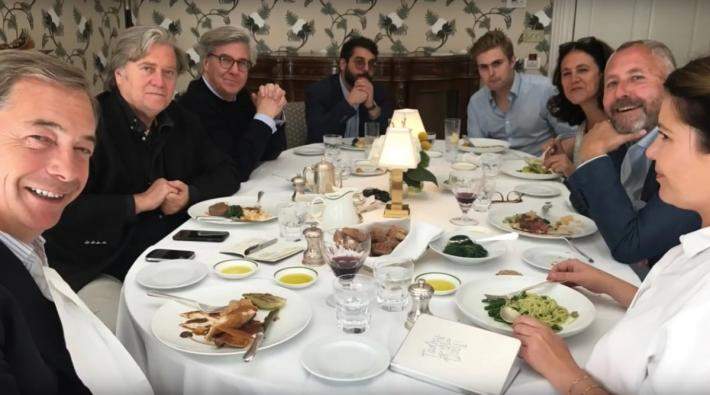
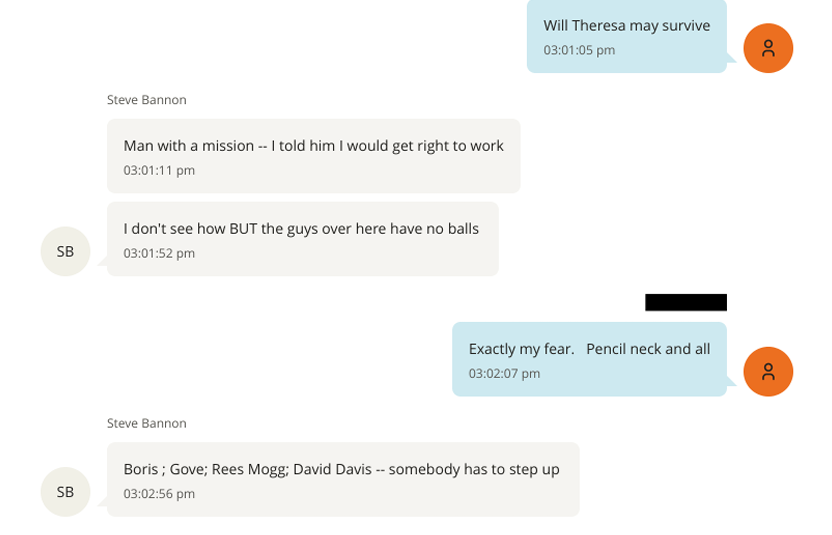
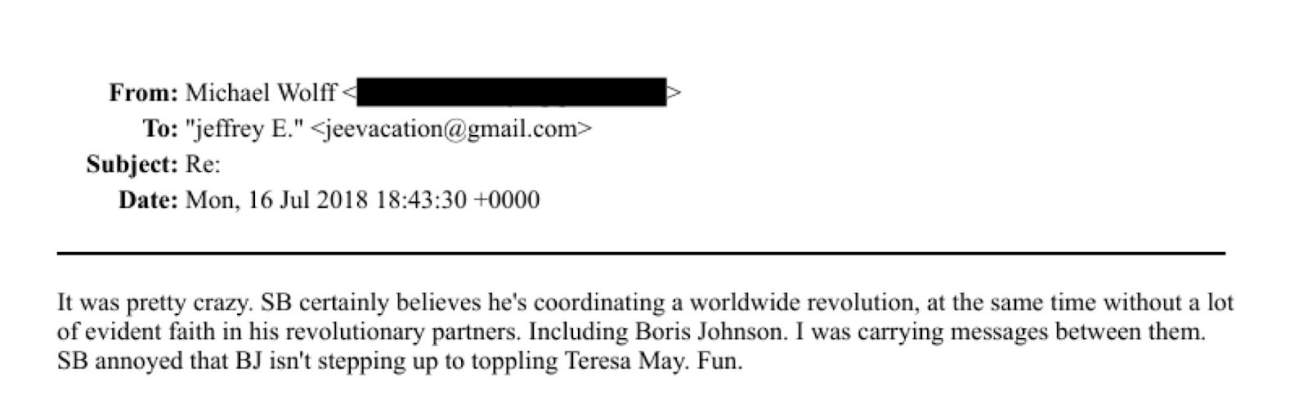


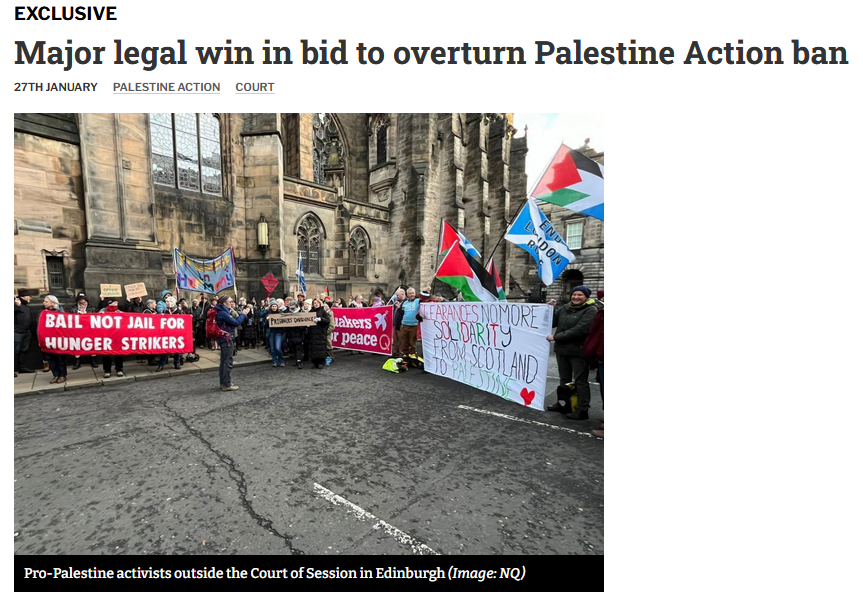


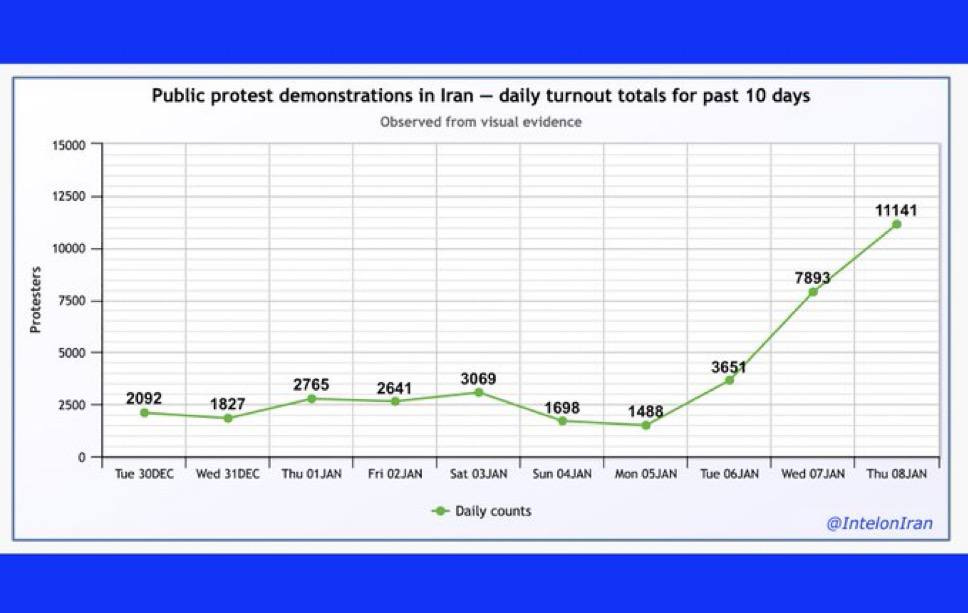
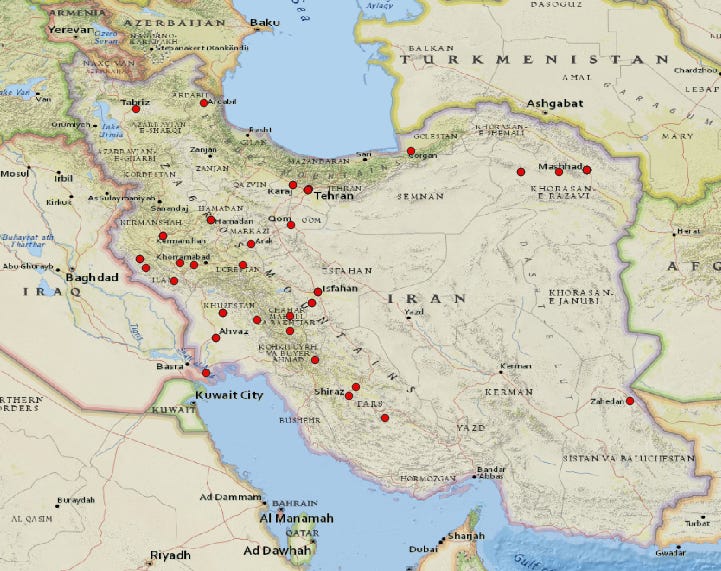
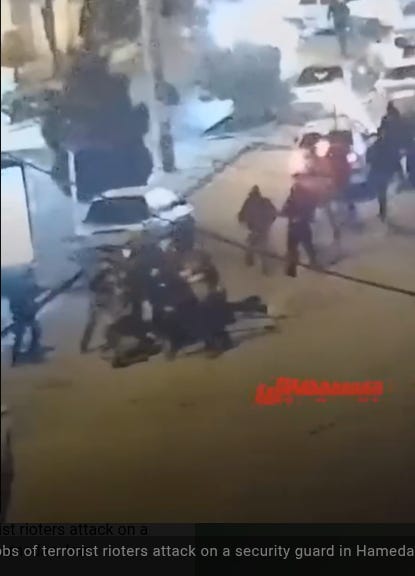
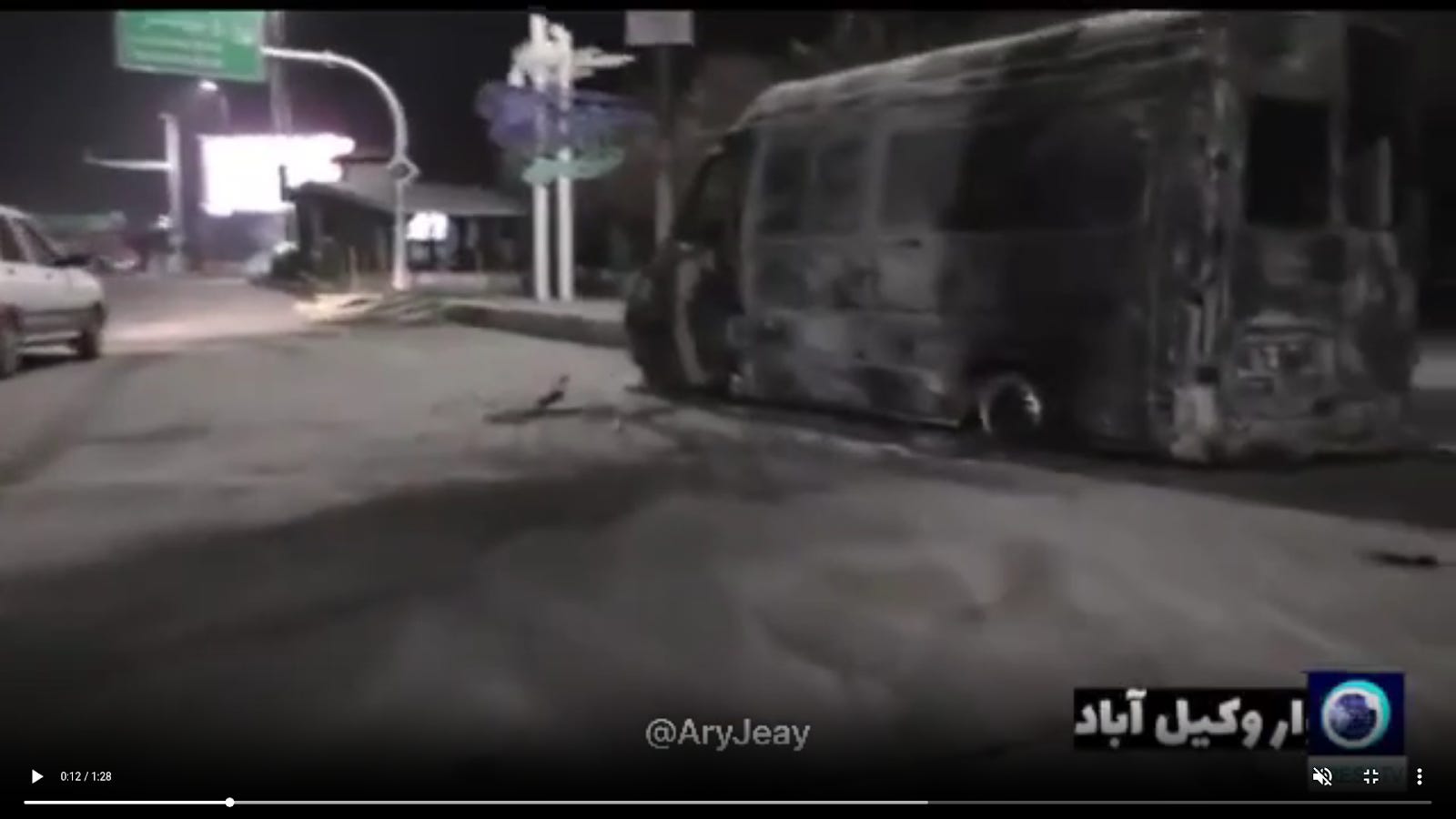
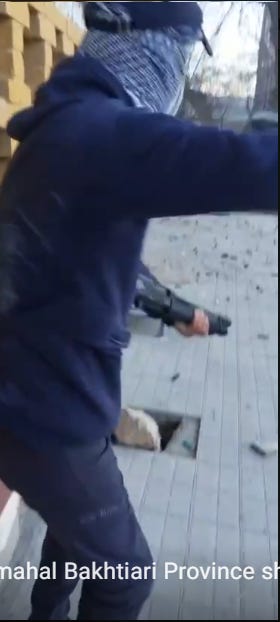
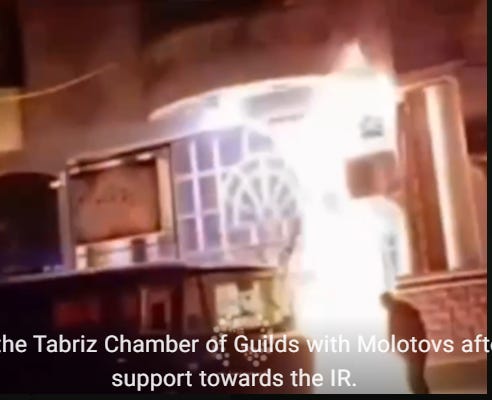
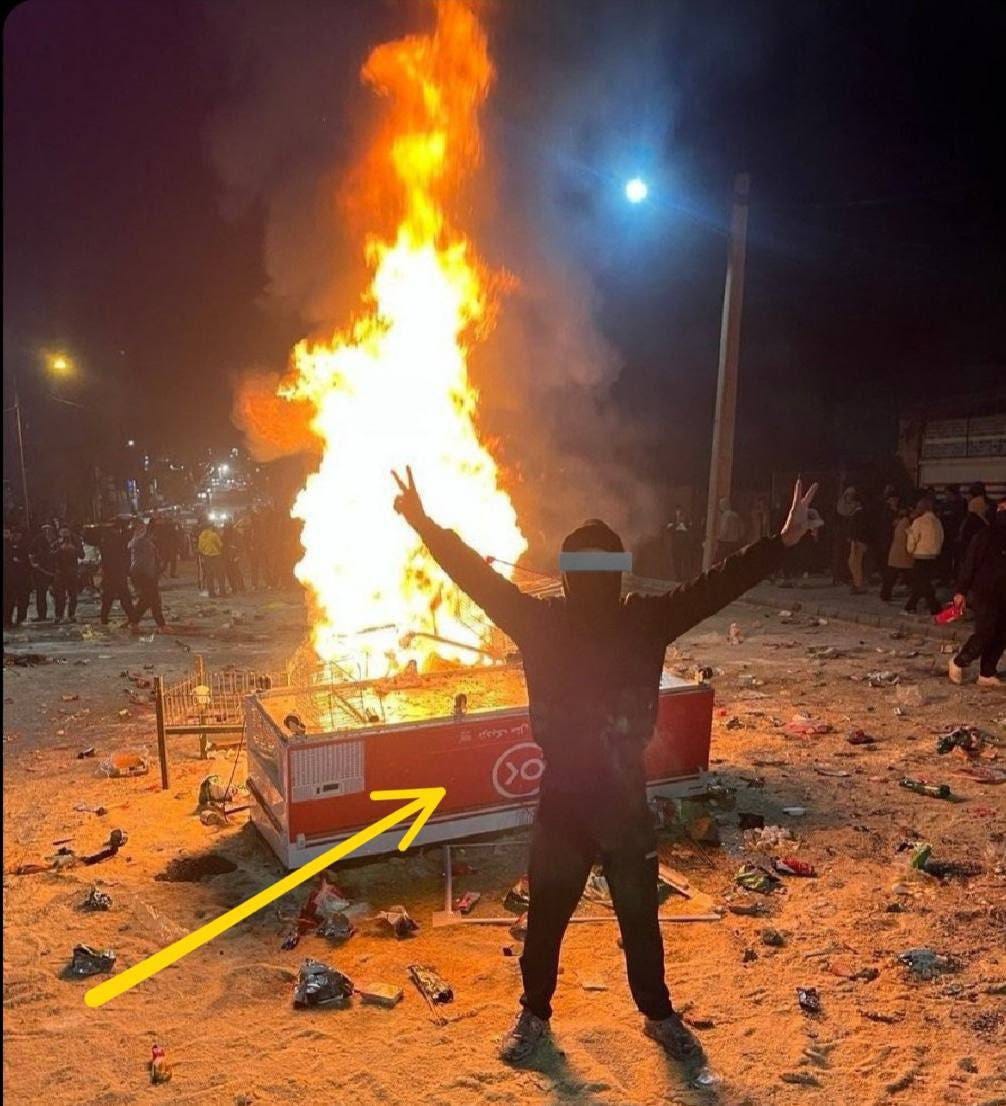
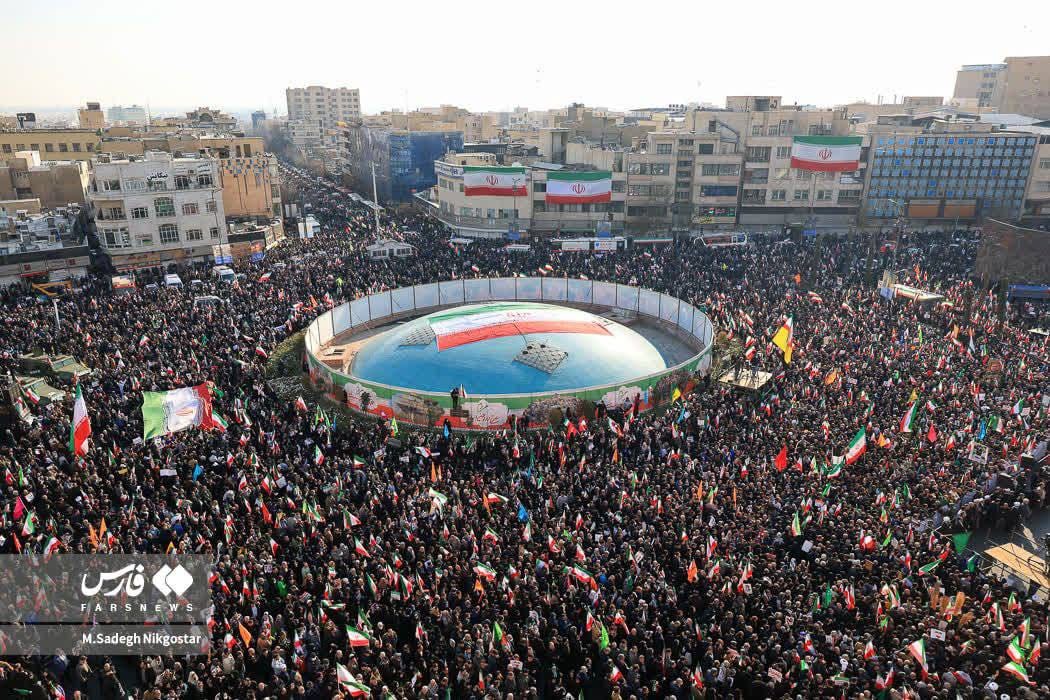

 | truthaholics
